


A year ago, Josh Rosenthal and I were talking about the differences between American and French trail running. At one point, almost as a joke, I told him:
“Hardrock belongs to the French.”
The numbers backed it up. Over the last sixteen editions, only three American men have won Hardrock. Everyone else? French runners… and Kilian Jornet (5 times).
At the time, the explanation felt obvious. We grow up in the mountains. We spend our weekends climbing steep, technical trails. UTMB is in our backyard. Hardrock almost feels like an extension of that culture.
But then I thought about Jim Walmsley.
Arguably America’s greatest ultrarunner had to move to France before becoming the first American man to win UTMB.
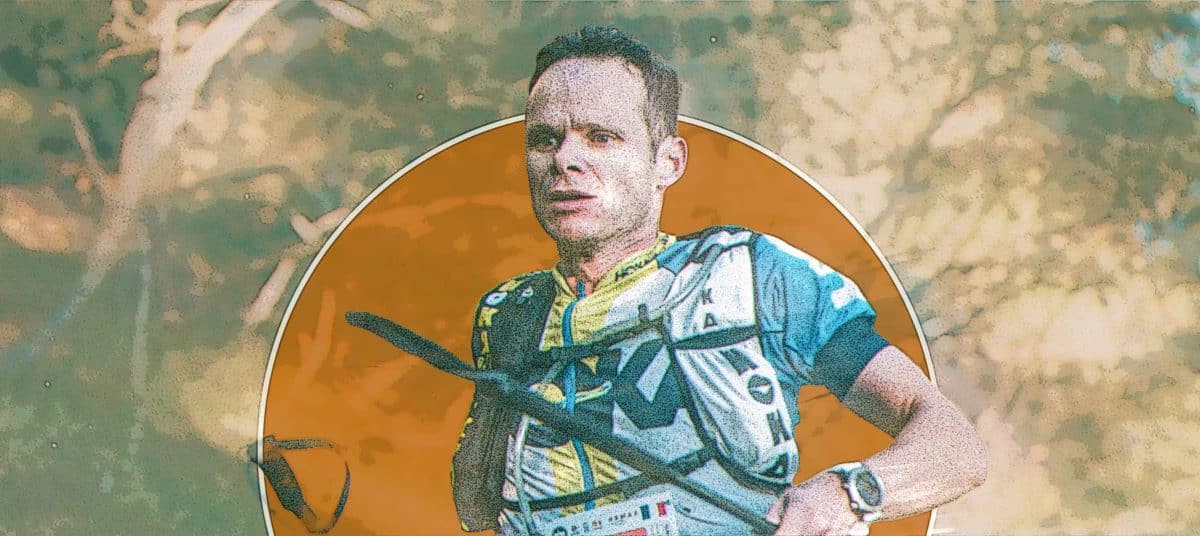
A few years later, Vincent Bouillard became the first Frenchman to win Western States. A Frenchman, yes, but also perhaps the most American Frenchman in trail running. He spent years living in the United States, working as an engineer for HOKA and immersing himself in American trail culture before returning to Europe.
Impressions of Klattermusen,
Rachel Entrekein and the Story Trail Running Needed,
The Curious Case of Emory Atterberry
Looking at those two stories together, I started wondering if they weren’t really telling the same story.
Two Worlds – American and French Trail Running
For a long time, trail running had two capitals: Europe and North America.
They shared a love for mountains and wilderness, but they grew up telling very different stories.
In Europe, trail running emerged from mountain culture. Long before races existed, shepherds, hikers, mountaineers, and guides had already built relationships with the Alps and the Pyrenees. Races like UTMB, Sierre-Zinal, and Grand Raid des Pyrénées became natural extensions of that history. Steep climbs, technical descents, and villages connected by centuries-old paths defined the sport.
America grew up differently.
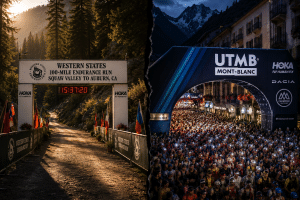
Its iconic races came from deserts, forests, mining roads, and vast wilderness. Western States, Hardrock, Leadville, Barkley, and more recently Cocodona each tell different stories, but they share a common spirit: adventure, self-reliance, and immense landscapes where getting from one point to another matters as much as the terrain itself.
The cultures reflected those landscapes. In Europe, trail running borrowed from alpinism. Precision. Vertical gain. Technical movement. Refuges. Espresso after the run.
In America, it borrowed from road trips and wilderness. Crews waiting at aid stations. Pacers. Pickup trucks. Belt buckles instead of medals. Dirtbags sleeping in vans before the start.
They weren’t competing against each other. They were simply evolving in parallel, almost like two different sports speaking the same language.
The Exchange
Somewhere along the way, those worlds began to overlap.
Five years ago, I barely knew what Cocodona was. I knew Western States and Hardrock, but they still felt like distant races happening somewhere else.
Today, I wake up in the middle of the night to check live tracking from Arizona. I spend a week following Cocodona, watch the Western States livestream until 4 a.m., and somehow know what’s happening at Broken Arrow before I know who won Marathon du Mont-Blanc that same weekend.
And I’m definitely not the only one.
American races have become part of the conversation in Europe. Cocodona. Western States. Hardrock. The Speed Project. Barkley. More and more French runners know the names, follow the stories, and dream about racing there.
It isn’t just the races. We started consuming American trail media too. Billy Yang’s films. Freetrail. Singletrack. Borderlands. Podcasts, documentaries, and YouTube channels that showed a different way of talking about running.
Suddenly, the Far West didn’t feel so far away. The curiosity flowed both ways/ More Americans came to Chamonix. UTMB became the race everyone wanted to win.
I remember arriving in California a couple of weeks after finishing UTMB. Every time I mentioned it to another runner, their eyes lit up. More than once, someone hugged me simply because I’d finished the race they dreamed about. As a French guy, hugs from strangers still feel a little strange, but it made me realize something.
UTMB wasn’t just a European race anymore.It had become part of American trail culture too. People started travelling. And their culture travelled with them.
More than Athletes
Jim Walmsley is probably the best example. America didn’t simply send Jim Walmsley to France.
France and French Trail Running changed Jim Walmsley.
Living in the Alps, learning those mountains, discovering ski mountaineering with François D’Haene, and adapting to an entirely different style of racing eventually made him the first American man to win UTMB.
His success wasn’t about bringing America to Europe.
It was about becoming a different kind of athlete.
The same is true in the other direction.
Vincent Bouillard won Western States as a Frenchman, but also as someone who spent years living and working in the United States. He understands American trail culture from the inside while still carrying the mountain background that shaped him in France.
Neither runner belongs entirely to one world anymore. I don’t think that’s a coincidence. A year ago, I joked that Hardrock had become a French race.
I still think there’s some truth in that. The numbers speak for themselves. For nearly two decades, French runners, along with Kilian Jornet, have dominated one of America’s most iconic mountain races.
But I don’t think that’s the most interesting story anymore.
The more interesting story is what happens when athletes stop seeing cultures as borders and start treating them as classrooms.
Jim Walmsley didn’t win UTMB from Arizona. Vincent Bouillard didn’t win Western States by staying in France. Both crossed cultures before they crossed finish lines.
Thomas Cardin’s fourth-place finish in his Western States debut only reinforces that feeling. French runners no longer look at Western States as a fascinating American classic.
They’re arriving expecting to compete.
At the same time, Americans are no longer trying to beat Europe from a distance. They’re moving there, living there, and learning from it.
Maybe that’s where trail running is heading. The greatest races in the world no longer belong to the countries that created them. They belong to the athletes curious enough to cross cultures, borrow ideas, and become something new.
And until an American starts winning Hardrock again…
I’ll still call it a French race.