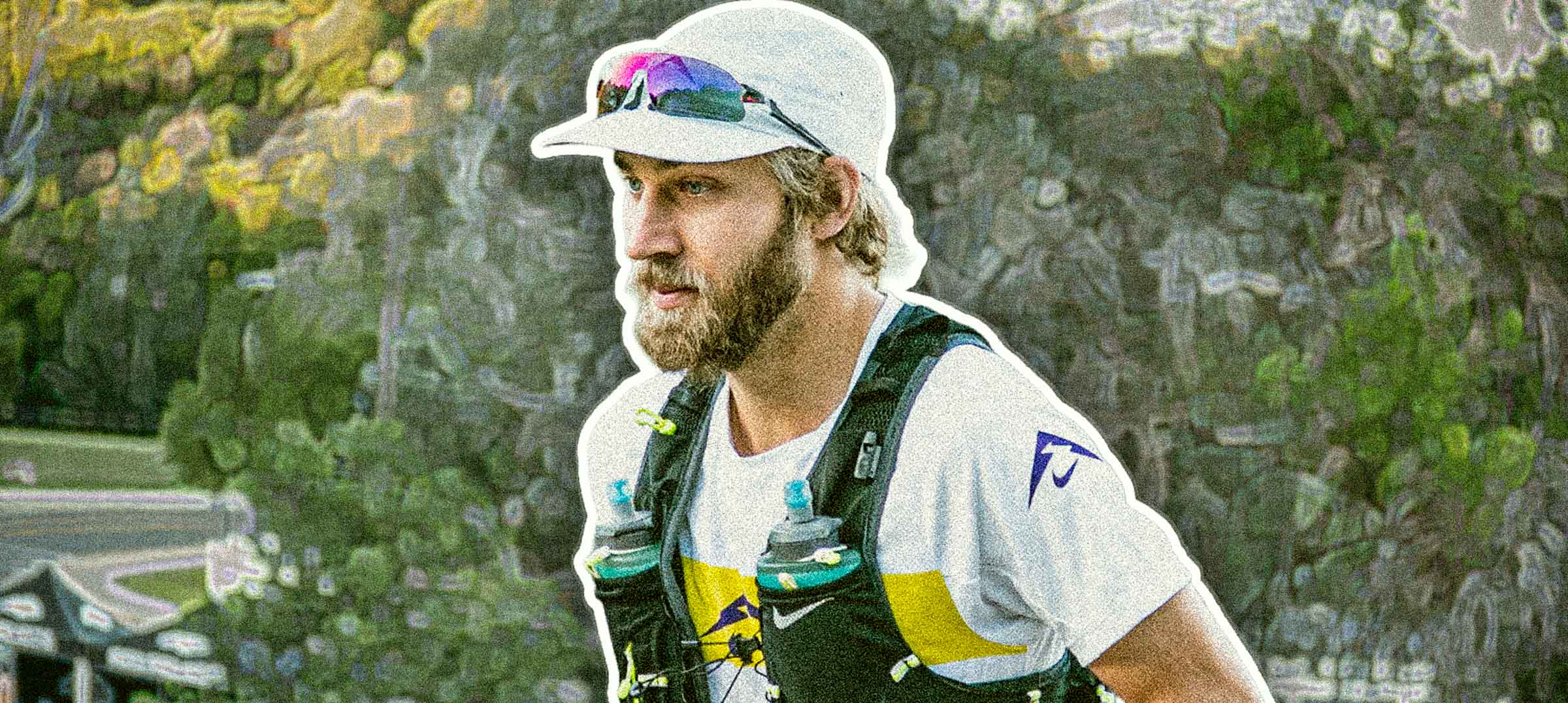


Only 364 more sleeps until Western States 2027.
After watching nearly every minute of the 2026 Western States 100, these were the ten ideas I couldn’t shake. For the full discussion and context behind each point, listen to this week’s episode of the Borderlands Trail & Ultra Running Podcast.
1. Dylan Bowman Really Is the Voice of Trail Running
Whether by design or circumstance, Dylan Bowman has become the primary narrator of the sport’s biggest race. The question isn’t whether he’s good enough. Thank God he is. The question is what responsibility comes with Freetrail being so intertwined with the institution of WSER.
2. The Broadcast Knows Where Everyone Is
Technology has largely solved the “where” problem. Storytelling still has to solve the “who” problem. Commentators had issues knowing who was on screen and sometimes they had issues knowing why those on screen mattered.
3. We Don’t Care About Places. We Care About Stories.
Hans Troyer running in first was never the story. Hans Troyer emptying himself to change the race was. Places matter because they tell stories inherently. Can we put the effort into telling stories that aren’t as legible on the surface?
4. We Interviewed the Wrong People… Or Did We?
Looking back, FreeTrail and Singletrack interviewed five of the six eventual podium finishers. The issue wasn’t who got interviewed. It was how difficult it still is to introduce tomorrow’s protagonists before they become household names.
5. Whose Job Is It to Find Tomorrow’s Stories?
Thomas Cardin arrived at Western States as a Golden Ticket winner that many English-speaking fans barely knew. Once he became relevant during the race, the broadcast needed his story immediately. Someone has to own that work.
6. Hans Troyer Was the Rabbit I’ve Been Waiting For
Hans may not have won Western States, but he changed it. His willingness to attack early forced everyone else to make decisions they otherwise might not have made. Great competitors don’t just win races. They change them.
7. The Americans Ran Western States Like They Used to Run UTMB
The American men attacked early while many of the Europeans remained patient and disciplined. Francesco Puppi ignored the script, matched the aggression, and somehow had the engine to sustain it. It was one of the most fascinating tactical races we’ve seen.
8. Western States Has Outgrown Its Broadcast
Covering the men’s and women’s races simultaneously increasingly feels impossible, not because the production is lacking, but because both races deserve full attention. That’s a sign of growth, not failure.
9. The Broadcast Should Never Become the Story
The personalities in the booth matter, but the race should always remain the protagonist. The best commentary helps viewers disappear into the action rather than reminding them who’s holding the microphone.
10. Trail Running’s Next Frontier Is Context
Billy Yang and Mountain Outpost have fundamentally raised expectations for live production. The next leap won’t come from another drone or another camera angle. It will come from helping fans understand why every moment matters.
Transcript
Show Transcript
Josh (00:00)
it’s the Monday after Western States 2026,
I feel like Monday is a little bit of where I am best, right after the event, because once the race is over, I’m less interested in who won, and I’m I’m a little bit more interested in what the race revealed. Now, don’t get me wrong, I’m a mega fan. I absolutely enjoyed this race as a fan from top to bottom. So consider this the first edition of something I hope becomes a tradition, the Monday after. These are 10 things I couldn’t stop thinking about after Western states.
It’s the Borderlands Trail and Ultra Running podcast presented by Kiprun. If you find yourself in Brooklyn, stop by Hatchet Supply and go try on the Kiprun Kip Summit Max for yourself. Incredible shoe. Go check them out if you’re in Brooklyn. Also, Borderlands.cc. If you want to play our new eight-bit trail running games, go to Borderlands.cc and click play. Also, tons of original, interesting content from writers like
Bryce Carlson, who does human interest stuff, and Inky Steve writing about shoes. Let’s get into it. Dylan Bowman, this is number one. Dylan Bowman really is the voice of trail running, or some of you like to correct me on trail racing, and that makes sense. But he’s the voice of trail running. And before anybody thinks I’m going somewhere negative with this, I I want to say that I think he’s very good. I have nothing critical to say.
Of him as a performer, ⁓
And before anybody thinks this is going somewhere negative, ⁓ I want to say that I think he’s very good. And thank God he’s good. Seriously, because I I don’t think we have a choice. It has to be him. He’s on the Western States board. Free Trail has become deeply intertwined with Race Week. He’s hosting the live stream, the press conferences, the preview content, his free trail pre-race content is distributed by Western states. Somehow, even though Western states
it says that iRunFar is their partner. I didn’t see Free Trail as a partner. I saw Trilcon, which is also Dylan. ⁓ irunfar is the only media company called a partner. However, Western States distributes Free Trails interviews. So they’re they’re heavily intertwined. Whether intentionally or not, one person has become the narrator of the biggest race in trail running. That doesn’t bother me. More so it fascinates me.
As someone who loves business, who loves strategy and loves to think through things on a on a deep level, ⁓ it’s it’s it’s fascinating because it changes the responsibility. At some point you stop being just another media company. You become part of the institution. Free trail is part of the institution. And once that happens, I think your responsibility changes a little bit. If Singletrack, who does really great pre-race interviews from an editorial standpoint, they do
Nonrunners as well, obviously, like a Scott Jurik, or they’ve Anton Kaprichka like at UTMB last year. ⁓ they can choose whoever Finn and his editorial team thinks is interesting editorially. They’re independent. Whoever teases out the story he thinks is important by whatever standards he chooses to implement, and he or his team. But Dylan and Free Trail, in my opinion, has a different responsibility. You’re no longer just serving your audience at Free Trail. You can’t be.
let’s say I’m not a fan of Free Trail, I am, by the way. Let’s say I’m not, but I’m excited for Western states and I look to them for pre-race content. I come across Free Trails content optimized for free trails values distributed by Western states on their YouTube channel.
Can you imagine that in any other sport, could Bill Simmons and the Ringer handle all of the Super Bowl’s pre-race content distributed by Fox, but using its own editorial standards and its own editorial lens? Absolutely not. Free Trail
has to be serving the race itself before it has to be serving free trail. And I think maybe idealistically they would say that those two things are perfectly aligned, but they’re not, and you’ll see why I don’t think that they are. ⁓ serving the race is a different job. And that’s really this is really two different organizations here that I’m talking about. Can’t be just one. And don’t think and I I don’t know exactly where that line is of where Free Trail should end and where Western states begins. I just know that it exists.
And it’s interesting to pay attention to. Okay, number two, the broadcast knows where everyone is. I mean, this is it it was incredible. It’s it was an incredible elevation. What what I what I admire immensely ⁓ about this broadcast in general is that it was a clear increase over last year. I would say two to three X. I mean, just they are advancing dramatically over there. We the broadcast knows where everyone is.
The production team deserves tremendous amount of credit. I think Billy Yang has fundamentally changed what trail running expects visually. I think he did that through his documentaries and now being the as as Dylan and Corinne called him, the executive producer on this, I think he’s doing it here. Mountain Outpost was clearly a fantastic partner to him in in helping get it done. Every year, the broadcast is getting materially, exponentially better. And the cam the cameras are getting better, the graphics are getting better, though I think the graphics were the thing that had
the most room to improve. Drones are crushing it. Their pilots are amazing. The tracking is there. You know, the broadcast knows where everyone is, but unfortunately, the broadcast doesn’t know who everyone is. Which is exactly why I think that is there’s still a major frontier here. And I would would divide this into two categories, not knowing that they know.
Where everyone is, they just don’t know who everyone is. On one level, you know, they spent a lot of time guessing at who was on the screen. So that’s a compliment to the technical team because they were able to get everybody on screen. ⁓ but not knowing who’s on screen is still a major problem for those live streams. It’s too much of an investigation in real time on the screen. They don’t know who it is. Separately, they don’t know who it is because someone like Thomas Carden, Tomac Arden from Kip Run.
is making a late race surge and they actually don’t know who he is really. They knew that he was with Kip Run, they knew that he won Chianti. Couldn’t give us much more than that. I think that was a miss. So we see them better than ever, but we don’t know them better than ever. We don’t know practically who’s on screen. We guessing based off the hat you heard the hedging at the beginning, no, they’re all wearing jackets at the beginning of this race. We’re not gonna know who they are when those jackets come off.
There’s just a major opportunity there for someone to solve who is on screen. that’s not because the production team wasn’t prepared. Just the opposite. I’m sh I I know they were extremely prepared. It’s because it’s really difficult. I get that. But a lot of things are difficult that we solve all the time. In fact, only the notable solutions in life are the ones that were difficult. Only the s the the notable solutions, the ones that get most celebrated.
Are because they were difficult to solve. So let’s figure out how to serve our commentators with tech that makes it completely clear who is on screen without a question. And it doesn’t have to be a visual cue. I think there’s a solution to be found there. For the issue of the unknown runner, which I guess shout out to a new ⁓ apparel brand called Unknown Runner, kind of funny as I was writing this.
And for the issue of an unknown runner emerging on screen, that’s a really that’s a really high praise to the tech teams. We’ve got eyes everywhere. We’ve solved the technology faster than we’ve solved the storytelling, though. If I could add one person to that production truck next year, it wouldn’t be another camera operator. It would be ⁓ a producer of sorts. So you heard them asking for clarification at times from Billy who that was. Now
My guess is that Billy was wearing a thousand hats that day. And ⁓ it sounds like he was wearing one that was extremely critical to the fan experience of who’s that on screen? Are you sure that’s who that is on screen? ⁓ meanwhile, he’s probably taken a thousand other calls. and I I know Billy, I think highly of him. we all do. So I that’s not a slam on him. That’s a could we get one person whose sole job is to know who’s on screen and deliver
the intel to the commentators so that they can distribute it. I am working on building something like that called Live on Course or Lock, an intelligence layer for races, a deep intelligence layer for races. It’s not just checkpoints, it’s not just splits. This race, we were served the story of this race largely as a function of splits. And I think that that was a miss. There’s a lot of intelligence available on that course. And I think the story can be more than the splits.
Or the splits themselves aren’t instantly legible to everyone. So super only the super fans or the fans could really interpret what a split was, the story that the split was telling. The next frontier isn’t better cameras, it’s it’s better context. Okay, the the third thing: ⁓ we don’t care about places. this was one realization that I had: is that we don’t care about places, we care about stories and places.
Places, first place, second place, last place, those are instantly legible places. So we like those places because th th the story is implied immediately and we get it immediately. Hans Troyer proved that we care about stories. Nobody cared so much that he was in first place. Yes, we were excited that he was in first place, but why did we care that he was in first place? We
We understood the story instantly. We because he had shaped he does a good job of shaping his own story, young and fit. He’s a young guy. He’s absolutely emptying himself. He’s trying to blow the race apart. Then Francesco catches him, and that’s not just a pass, that’s a payoff. We got a payoff. We earned that payoff. That was like a payday for us fans. We’re watching a long race and we see this pass happen by two, by two runners who are very good on social media.
So we understand them. They’re legible to us with or without the place that they’re in. In fact, that they’re so good on social media, that’s where that extra buy-in, I think, was on the two. And then when we get the payoff, and then Hans starts fading. And again, w we’re not interested in him necessarily because he dropped to 20th. We don’t care about or 18th place. We don’t care about 18th or 20th place. We cared about Hans. So we care about stories much more than we care about places.
But we also look for ways of expediting meaning. So first place expedites meaning to that runner. And I think that’s interesting. That’s the story. DFL works the same way, dead last. The reason that we can grab on to DFL is because we can instantly understand the story of someone has been grinding all day, so much so to where they’re gonna come in last. So we can place a story on top of them, even though we know nothing about them. We can say this story of this person is that they keep going when they want to quit.
Well, how many people keep going when they want to quit and think that they might not be able to pass the cutoffs? I think the woman who gets twenty-fifth from last, her story might be markedly better, but we don’t have a way of making that instantly legible. So we we we allow the place that they’re in to interpret the story and to create story. This isn’t bad, this is observation. ⁓ this isn’t a racing problem, this is a storytelling problem. The runner in 10th to last might have the better story than Hans even, ⁓ but we
want the story and we look for the stories that are most legible and we grab onto those stories. Okay, four. ⁓ we interviewed the wrong people before Western states. Well, okay, I I think that was a bad headline because I don’t think that that’s totally true. We didn’t. Maybe that’s what surprised me. When I when I look back, Free Trail and Single Track interviewed five of the six eventual podium finishers. Okay, so it sounds like we interviewed the right people.
But the interviews weren’t wrong. It’s the emphasis I think that was actually wrong. Our media ecosystem is naturally optimized around names. Jim, Killian, Zach, Hans. And why? Those are the stories we know people will click. In the media business, you have to, you’re subject to the algorithm. You don’t have an audience no matter what, no matter how great the single track pre-race interview is or the free trail interview is.
You do not get the clicks unless you can frame it in a way that people will click. And and what also gets the clicks is that it’s that it’s also Hans. So the the guess list is optimized around the algorithm. So the algorithms are driving the guess list indirectly. I’m not saying that the editorial teams on these are are not intelligent people. I’m just saying these intelligent people are seeing the same signals, and that’s an interview with Hans is going to get clicks.
And yes, he’s also highly likely to win. So editorially, I would make the same decisions. I’m not questioning their decisions, but if every interview is reinforcing the existing star, everyone that was interviewed was an existing star, that’s one less opportunity to introduce a tomorrow’s protagonist. Now, tomorrow’s protagonist is not.
Interesting, it doesn’t get the clicks. So even if single track found the most interesting person that surprised us, like a Thomas Cardin, if they had interviewed them pre-race, they would have gotten sub 1000 clicks, probably, maybe 1500. And that’s because there is there is a lift in those clicks because it’s single track, but in the end, those don’t get the clicks, even with excellent, excellent framing.
An a well-framed interview with Thomas Cardin does not get the same clicks as a poorly inter ⁓ framed interview with Hans Troyer. So we go towards that. That makes sense. Interviews are chosen based on a mixture of values. ⁓ one is can I frame this interview in a way that gets in the algorithm and takes off in the algorithm? And if that’s the value, we’re gonna get something rather predictable, predictable names. Predictable isn’t bad, it just means optimize for the algorithm. Also important to note, I believe the algorithm
Is a fair representation of the audience and it reflects fairly what the audience wants so long as the interview is framed and packaged with the thumbnail and the title in a way that does justice to the interview. So I don’t think there’s the big, bad, evil, evil algorithm. I actually think it represents what the audience wants. Okay. But if everyone’s building toward what the audience wants, we’re gonna miss out on the others. But this takes me back to where I think Free Trail has a responsibility to bring forward names even if they don’t work in the algorithm.
Due to their proximity to Western states. Now that doesn’t mean does that mean they invest all this time into an interview that gets a thousand views? I don’t necessarily think that that’s true. They’ve got a packaging challenge and that’s on them to do. But I do think that we should be surfacing the names and the stor telling story of the names of the people who are are not the clickbait, who are not gonna get into that algorithm and take off, even if the packaging is top-notch. I think single tracks though.
Is entirely free to optimize for the algorithm as as an outside editorial voice. I don’t think that they bear a responsibility to surface somebody who’s not interesting. So I it’s it’s free trial’s proximity to Western states, their interconnectedness and being intertwined to Western states that creates that responsibility. Now, who does the best job, I think, at at at honest editorial surfacing of names? I always think it’s I run far. I think they’re
more journalistic in nature. They came before the algorithm age. They came from the search engine optimization age. So the way that they build their their pre-race editorial ⁓ is magic, even if it’s a little bit sometimes slower and not optimized for entertainment, the way that the new media companies are. So the overlap in interviewees for single track and free trail largely feels like they optimize for the same values when I think that free trail has a bit of a responsibility to be optimized for different values. Okay.
Number five, whose job is it to find tomorrow’s stories? So that begs the question if the media companies aren’t doing it, and we made a case for why they may not be, so whose job is it? I think someone needs to be surfacing tomorrow’s stories, because this is what you do ⁓ in a in a growing sport. I think Thomas Cardin, my kids say that I’m in pronouncing it poorly, so I’m gonna call him Thomas Carden here, since most of you are English speaking world.
he’s the perfect example. I actually don’t think this is on free trail. Now there was a moment when Tomah was surging and he surged all the way up to fourth place. He had a great day. He ran so patiently. We’ll get to that here in a minute. ⁓ and ⁓ he as he was surging, Debo said, I don’t know much about him. He literally said, I don’t know much about Toma Cardam. So I I don’t think this is on free trail. I don’t think this is on single track or I run far. I think Kip Run
itself deserves the responsibility. This is their athlete who won a golden ticket way back in March.
To come to Western States as a brand that’s entering into trail running and and has named America as its like top, you know, a high priority market. They’re the presenting sponsor of this podcast. I think that they could have still a story th about Thomas. He’s a he’s a school teacher who is now a professional runner. He’s got a great story, great person. I spent a few days with him in Marseille. I found him to be
Funny, fun. I think he’s even silly. He’s a very unique personality. We were on a sailboat together and he strips down his underwear and jumps off into the water and swims around in the water. He’s the only one that did it. We were all everyone else was too afraid because the water was too cold. And I thought this guy is funny. He’s lighthearted, but I think he’s got he’s got that switch that he can flip because he says that all he knows how to do is win. And I’ll tell you, for his first time running 100 miles to come in fourth place, not top of the podium, absolutely a win. And so for for
The world did not know about him going into that. I think Kip Run had March, April, May, June to tell his story and to get it out there because I think those of us who were paying attention knew that he was going to be special at this race. And at least as the debutante, as Freetrail kept calling them, ⁓ as someone who debuted the hundred mile distance that day, what a great day. Of course, the finest debutante of the day was Jin Lichter and you know, not not even a close second, so make sure I acknowledge that. ⁓
Thomas is delightful, and I think that was just a miss. he’s an absolute killer when the gun goes off. I think he’s an incredible character. But here’s the thing I probably wouldn’t have watched a 30 minute Thomas Carden interview before the race. So I’m not saying that that’s that Free Trail should have done that, that that was a mistake on their part. I don’t think anyone would have watched it. First off, he doesn’t speak English. He only speaks French. or at least he’s only comfortable in interviews in French.
And if he was, we wouldn’t have watched it. I don’t think the pre-race interview needs to be the king and doesn’t even need to be the principal story driving piece of the race. I don’t know the solution right now. It’s not mine to solve in part because I you know, this is this is their problem to solve. How do you take that person who shows up in the top 10? You have not much clue of who they are. How do you instantly orient the audience around that person? Whose job is it to already know him?
Whose job is it to have that story ready? ⁓ Dylan saying he doesn’t know much about him shows us that a lot of the insight that we get is based off of Dylan’s network. And Dylan has ⁓ you know, in study of scarce resources, Dylan has scarce time. He doesn’t have time to get to know everybody. So to say that he doesn’t know much about him because he hasn’t had much interaction with them tells us that there’s a system there to be built that making sure that Dylan knows about more people and it needs to be in real time.
And it needs to be by that producer who’s set there whose sole job is to figure out who’s on screen and provide context to Dylan so that he doesn’t have to say, I don’t know much about who this person is. Number six, Hans was the rabbit I’ve been asking for. I absolutely loved that he went out so fast. ⁓ I wrote an article about this a few months ago, even. ⁓ I want to see people race Western states as a team. This is what a team would look like.
I know this wasn’t Hans’s goal, but this is exactly what I wrote in the article. What if Hans goes out so fast and blows up the field and makes room for one of his teammates to win? In my example, it was France Francesco Pupi was the example who would come in through and win. But why not Vincent Pouillard? He blew up the field. He absolutely blew up the field. No fear in Hans when he came out. Also no patience in Hans when he came out. He he was gonna win or or blow up.
But he acted as the rabbit and gave us the the course record. I think Hans Hans got the assist on Vincent Puyard’s course record, his massive course record, because of how fast he went out. ⁓ he changed Hans changed the race. ⁓ I hope that the 2026 race is forever remembered as the race that that Hans blew open and gave us these course records on the on the on the unicorn day of the the cooler weather. In my opinion, this is the closest we’ve ever had to a team effort in winning.
And I know that it wasn’t on purpose. Hans went out and broke the field, leaving room for Vincent to just have an incredible day. But also ⁓ Francesco and Ryan Montgomery all getting ⁓ beating the course record and Thomas Garden coming in beneath Jim’s 1409 as well. Okay, number seven, the Americans ran this race like they used to run UTMB. ⁓ the men attacked Hans and Jim ⁓ hard and early and impatiently and
blew up and the Europeans did what they tend to do better than the Americans, at least on this stage, is that they they waited and they were patient. They were controlled. But to Ryan Montgomery’s credit, who’s American, he ran like a European apparently that day. Controlled and comfortable. ⁓ Francesco is the one who bridged the gap. He came out, ran like the Americans and but his engine held up. I loved his story of falling at Black Canyon.
Not letting that get him down, falling again in training, breaking his arm, having surgery, and then coming back and getting this result. ⁓ incredible story. So the it was the performance of the weekend in a lot of ways because of Francesco’s resiliency. The his heart to win is tremendous. Number eight, the race has outgrown the broadcast. That actually is a compliment. There are now simply too many stories, too many meaningful moments to try and cover.
the men’s race and the women’s race on the same coverage at the same time. There’s too much interesting stuff happening and because the coverage is getting so much better, we could have eyes on all of it. Split screens don’t don’t serve, I think, the purpose that they think they do. It may give you the to check the box to say how much time was the men’s race on screen and the women’s race on screen gives you something to measure. But in terms of legibility, I don’t think it helps.
Imagine trying to broadcast the men’s and women’s Olympic marathon at exactly the same time. The stakes are that high for these runners, and they are giving it the same treatment that they’d be giving the Olympic marathon. ⁓ their whole heart, their whole heart’s going into this, and there’s so many opportunities. And I think by having the men’s race and the women’s day race on the same day, it makes sense from a heritage standpoint, from a tradition standpoint. But at what point do we start to optimize
The race for the fans and not the runners. The fans would have been well served by a men’s and women’s race being separate so that I could fully consume it. The women’s race was getting lost by what was happening in this crazy speedy Hans thing, ⁓ you know, and and then vice versa. What did we lose from the men’s race? Getting to enjoy Jennifer Lichter’s unbelievable debut and
unbelievable course record by like a minute and a half. There’s too many good stories going on. You have two of the two Western States wasn’t the best race of the year. It was the best two races of the year. And to to cover them simultaneously on the same channel, it was too much. I once interviewed Emily Hoggard and she said that she likes racing with the men. I get it. She said it elevates everyone’s performance. Yes, I get it. But at what point do we el what point do we start to optimize race day?
of the elites for the fans and not the runners. That’s gonna be the next level. What when when do you do this in a way where you are prioritizing the fan experience over the runners? I’ve I’ve dug into that on s on several in several ways and in in deeper and deeper ways. So you can go check out some of that content. But I think that that’s an important next step. Every other sport, every other growing spectator sport optimizes for the fan experience.
Okay, number nine, sometimes the broadcast became the show. This is tiny, but I noticed it. The coffee, you know, the commentators needing coffee, the inside jokes, the morning show kind of like comments. Again, I th Dylan and Corinne are excellent. I think Corinne, ⁓ and I’ve and I mean this as a deep compliment, is could outgrow Trailrunning as a commentator if she wanted to. easy for me to say. She belongs on you know, on network channels.
⁓ commentating sports. She is a talent of the greatest level. And I believe that this year was Dylan’s biggest leap in catching up with her. ⁓ because I think she is the standard. She’s the industry standard on camera for how for her role. ⁓ I think she’d be excellent at golf. I th I would absolutely love to see her there. But I don’t want the commentators to become characters. I get it. it’s part of the charm of trail running, but it’s a barrier.
To to its growth also. All right, last one. The next frontier isn’t better cameras, it’s better context. I genuinely b genuine genuinely believe that Billy Yang and his team has solved the visual problem. Mountain Outpost keeps pushing. Every year is better than the last. I trust the trajectory. Here’s what’s crazy. This year it wasn’t it it was two to three X better than last year.
I know it’s not where it’s going to be. Here’s what’s brilliant. Billy and his team have built trust that I know that next year is going to be two to three X better than this year, and and so on and so forth. I trust the trajectory of the live stream. But cameras only tell me what’s happening, stories tell me why it matters. So for the fan experience, I want every dead spot to be story development. We can be throwing to more human interest pieces.
They could set up a studio and have the top 30 men and top 30 women do a focused 60-second interview pre-race. So as they’re making moves and surging throughout the race, that we’re gonna we’re gonna get little moments of story and their humanity in there. When a moment of doubt comes or a bathroom break for the commentators that that these sort of stories can cover those moments. Coverage tells me what happens, but the context, all of this is gonna tell me why I should care. Throw up a video about Thomas Cardan.
It’s gonna show me why I should care about this person that we’re kind of surprised by seeing him in fourth in this men’s field as a debutant. I think that’s where the next generation of trail running media gets built, not with more drones or helicopters or GPS dots, but with better stories. Many people are doing it, many people are telling them. But nobody falls in love with a split. The split means nothing. The split is a data point that’s that supports the story. Hans’s split.
in and of itself is not interesting, but that it’s Hans’s split and that it’s whatever it is compared to what his goals were, all of these all the context that surrounds it, that’s where it’s at. And I think that’s what rest Western states revealed this year. Not that we need more coverage, just that we need and maybe not need. I just want more context. I love, I love this sport. I love watching race day, Western states. I’m excited to see how Hard Rock unfolds.
to an extent, but really now all eyes are on U T and B and I can’t wait. If you’re gonna be there, let’s hang out. ⁓ Josh Rosendahl with Borderlands Trail Running, let’s do this again.