
Editor’s Note: After listening to “Western States Wants to Protect. UTMB Wants to Grow”, Bob Crowley sent the response below.
Bob Crowley’s Response
The author of this piece gets a great deal right. The framing is sharp, the diagnosis of cultural dilution is real, and the conclusion — that trail running is ultimately about people — lands with precision. After forty years on the trails, I’d say: read this piece twice. Then lace up and go find out for yourself.
But I want to push the conversation further. Not because the author is wrong, but because the framing, as lucid as it is, still orbits the institutions — Western States, UTMB, private equity, field sizes — when the answer lives somewhere the institutions can’t reach.
Trail running didn’t come from races. It came from people who couldn’t sit still.
I was fortunate to be raised in this sport by people who helped build it. Not the races. The thing itself. Long before finish lines and UTMB points and streaming audiences, there were people moving through forests and over ridgelines because something in their bones demanded it. I ran alongside them for thousands of hours. What they taught me was not about pace or performance. It was about posture — how to hold yourself in relation to the mountain, the mud, the darkness, and the stranger beside you who just handed you their last gel at mile 73.
Those people didn’t talk about protecting the culture. They just lived it. Generously. Without agenda.
That is the tradition we are actually talking about.
Impressions of Klattermusen,
Rachel Entrekein and the Story Trail Running Needed,
The Curious Case of Emory Atterberry
The debate about WSER versus UTMB is a proxy war.
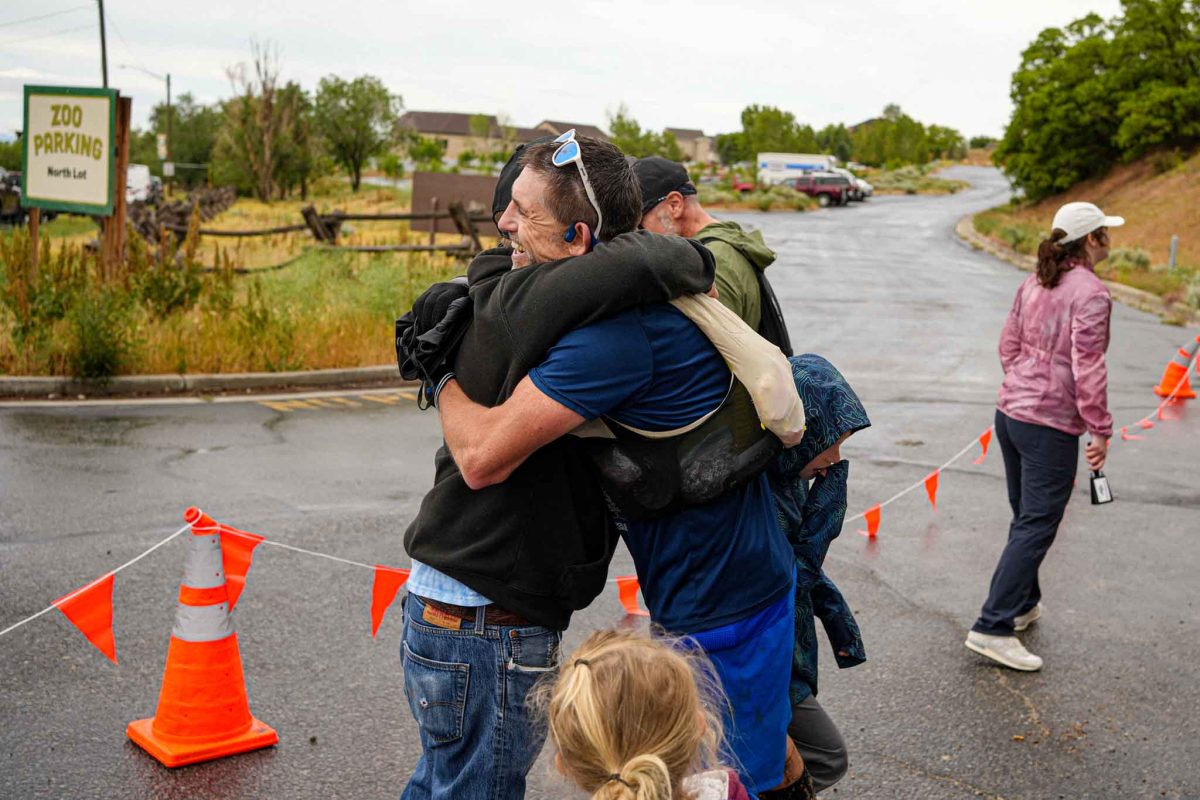
It’s a useful proxy — the author is right to use it — but we should be clear about what it is. Both races are artifacts. Important ones, yes. Symbols with genuine gravitational pull. But the culture of trail running was not born at Squaw Valley in 1974, and it will not die in Chamonix. It lives in the Saturday morning group run where a veteran slows down — voluntarily, without being asked — to run the final miles with someone who is struggling. It lives in the volunteer who drives four hours to stand at a remote aid station at 3 a.m. for a stranger.
That behavior cannot be mandated by a governing body. It cannot be purchased by private equity. It cannot be replicated by expanding a race series to seven continents.
It can only be transmitted — person to person, mile by mile, the way it always has been.
So, is the culture at risk? Yes and no.
Yes, in the short term: growth always dilutes. When I became ITRA president, I asked exactly this question: will we rise to the challenge of welcoming the tremendous influx of new members and teach them our values, or will we allow those values to be diminished and eventually forgotten? That tension is permanent. It does not resolve. It must be managed, generation after generation.
No, in the long term: because trail running is not a product. It is not a brand. It is not even, precisely, a sport. It is closer to what the author implies at the very end of his piece — a set of behaviors rooted in something older and more durable than any organization. Those behaviors have survived commercialization before. They will survive it again.
The author compares infrastructure to culture, correctly noting that infrastructure scales and culture doesn’t. What he stops short of saying is this: culture does not need to scale. It needs to persist. And persistence is what trail runners are actually trained for.
The trail runner’s real currency is not a result. It is a story.
Trail running is simultaneously the most selfish and most selfless pursuit I know. You go alone into something hard. Profoundly alone, at 3 a.m., in the cold, with a headlamp and a list of things your body would prefer you not do. That’s selfish in the most elemental sense — a private reckoning. But here is what the elders taught me: the moment you finish — or don’t — that story belongs to the community. It becomes part of the shared library. The veteran at the aid station who looks you in the eye and says I’ve been here. I know what this is — that is culture operating exactly as designed.
This is why no FKT, no podium finish, no race series acquisition can touch the center of this thing. The center is a conversation between a person and a trail and, eventually, between that person and everyone else who has had the same conversation. That exchange is ancient. It is not going anywhere.
The next generation will change the practice. They will not change the premise.
This has always been true. Every generation of trail runners thinks the previous generation had it purer, harder, more authentic. Every generation is partially right and mostly wrong. The tenets — generosity, humility, persistence, community over outcome — survive every stylistic evolution because they are not stylistic. They are structural. They are why the sport works, not just culturally but practically. A trail runner who won’t help another runner is a trail runner who hasn’t yet been in enough trouble to understand that they will need help themselves.
The sport teaches this. Eventually, it teaches everyone.
A final thought.
The author’s framing — growth versus preservation — is the right argument to be having loudly, publicly, and without deference to the institutions that have a stake in how it resolves. Keep making it.
But the outcome of that argument, whatever it is, will not determine trail running’s future. The future will be determined by the runner who finishes her first 50K and turns around at the finish line to wait for the person behind her. By the club captain who runs the last mile with the slowest member every single week. By the elder who passes the torch with no expectation of credit.
Trail running survived the Gore-Tex era, the minimalism craze, the obstacle race decade, the Instagram athlete, and a global pandemic.
It will survive private equity.
What sustains it is not fragile. It is the oldest thing we know how to do: move through the landscape, together, and tell the truth about it when we get home.
We did not make this culture. We were made by it.
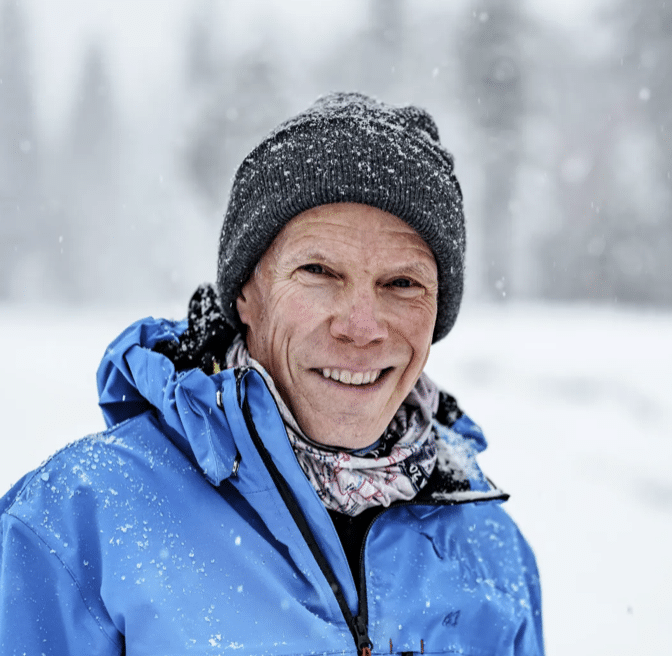
Bob Crowley is the former Head Yeti of the Trail Animals Running Club, former President of the International Trail Running Association (ITRA), and a forty-year member of the trail running community in the United States.