




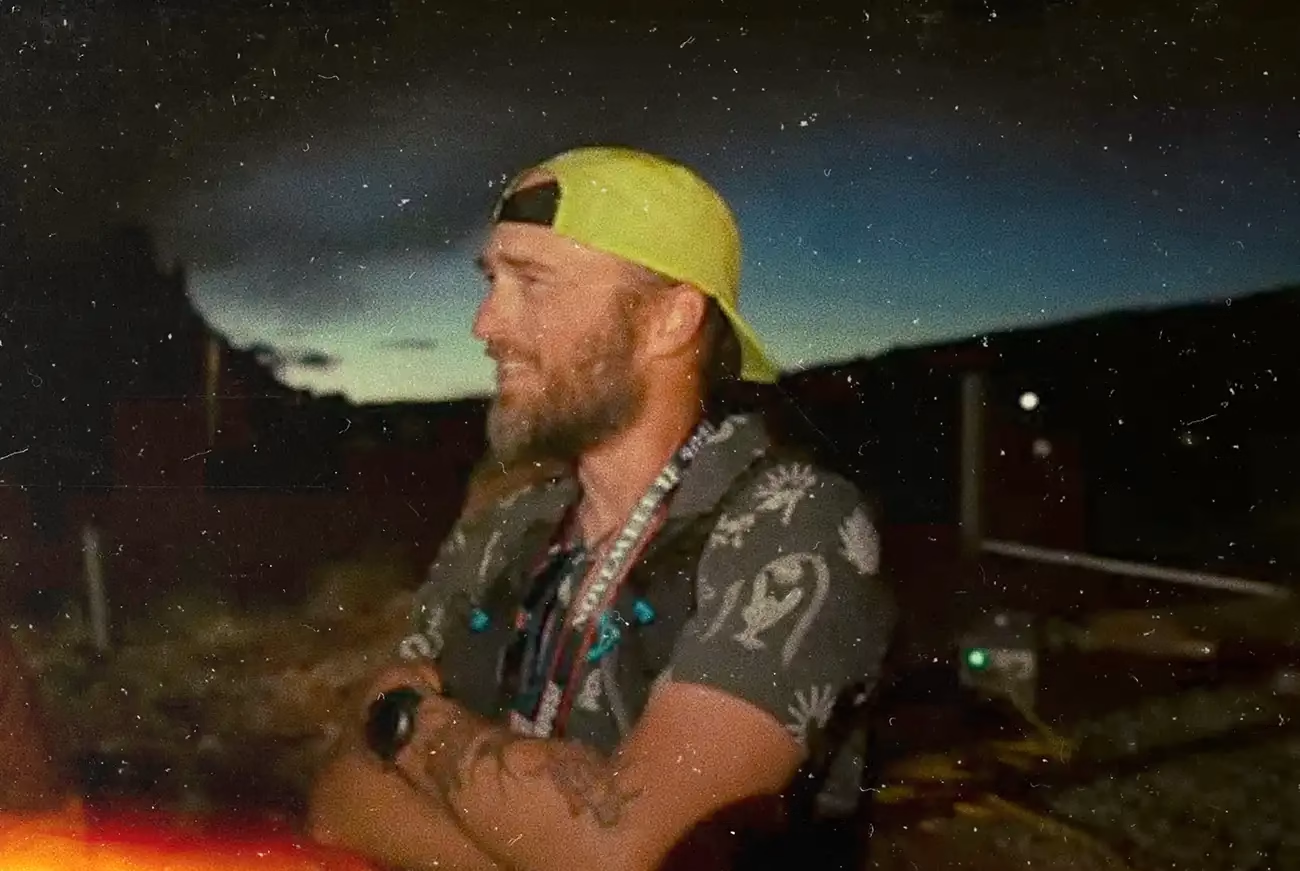
A few years ago, I sat down with a Utah runner named Michael Whiteside after he completed both Wasatch 100 and Bear 100 in the span of three weeks.
Two notoriously difficult mountain hundreds. A demanding physical challenge. The sort of thing that immediately gets the attention of other ultra runners.
Listening back recently, something else stood out.
At one point, Michael describes reaching a realization that many runners eventually encounter. His legs weren’t coming back. The rebound he expected wasn’t coming. The race he had at that moment was the race he was going to have for the rest of the day.
Most of us spend years learning how to solve problems in this sport. Better training. Better pacing. Better nutrition. Better gear. Ultra running rewards that mindset because so many problems actually do have solutions.
Then every once in a while, you’re left with something that can’t be fixed.
You can still move forward. You can still make decisions. You can still finish.
But the discomfort remains.
What I appreciated about Michael’s perspective is that he wasn’t describing toughness in the chest-thumping sense of the word. He was describing acceptance. The ability to stop negotiating with reality and work with what is actually in front of you.
That idea sits underneath a lot of long-distance running. Not just at Wasatch or Bear, but on ordinary training runs and ordinary days.
The conversation starts with two hundred-mile races. It ends somewhere much broader than that.
Transcript
Show Transcript
B O R D E R L A N D S • Trail Running (00:00)
I kept telling myself, your legs are not going to come back like a normal 100.
It’s your legs are gone already, like Wasash destroyed. We’re not bouncing back. Yeah, like you’re not going to bounce back. This is what life is going to be like. Yeah,
So how many weeks until the bear? So three weeks this year. It was three weeks. It’s been two before, but this year was three. Great. So you know, it’s.
five days off, literally not doing anything. Do a little bit of walking and then that Saturday, so six days later, start running again. What was your volume like? It was 8 to 10 the first Saturday Sunday, which I actually felt way better than I thought I would. Oh, wow. And then I think I did 40 or 50 miles that middle week with. Dang. I mean.
Felt like kind of a regular training week, right? Not a bulk week, not a high end, but average. So felt pretty good. There are some things that didn’t feel good. But it wasn’t like, OK, I’m injured. Wasn’t deal breakers. No, not at all. So it was just like, kind of expected. I didn’t expect it to feel good. And then the taper week came. And it’s right back at it. And it was like, and I felt nervous before every race.
Yeah. Hands down. But this one was different, right? Was Wasatch weighing on your mind? Like what you’ve done, what the miles you already put on your body? Yeah. I mean, I was assuming I was going to be tired before I even started. Yeah. I mean, it was like, it’s going to suck. Right? I mean, I thought, I knew instantly before I even started that it was going to suck. Yeah. I mean, I put it in my head that way, which most of what I put in my head for Bear was exactly what you shouldn’t.
I mean, you know, early on, I felt actually pretty good. Um, getting into the first crew stop, which is like 19, right? Um, felt pretty good and was doing okay. Nutrition, you know, hydration, but quickly, quickly made a turn after that. So they’re, you know, big long climb, start a warmup. And, uh, then, uh, you know, I couldn’t eat anymore.
Really? Yeah. That quick? So it was, there’s a video and I was looking for it. So it, remember exactly what I said, but it’s still on my GoPro. I’m even offloading it. But I, I vividly remember saying, this is going to be the hardest thing I’ve ever done. And I’m at mile 30. I thought I’m going to have to dig deeper than anything I’ve ever done before. This is going to suck. Like I’m tired. I can’t eat. Nothing looks good at an aid station. You know what I mean? I was still drinking. I was still drinking. You know, they did gnarly. So still drinking.
you know, calories at that point, but it was rough, man. All right, so, I mean, clearly we all understand the concept of digging deep, but what everyone sort of unearths when they’re digging is unique. As you’re digging deep, like, what are you finding in yourself? A, what’s there that you can pull on? And B, did you surprise yourself? Yeah, definitely. Definitely surprised myself. You know, I’ve…
I’ve learned over time with struggles and addiction and whatever else that I don’t have an off switch. So once I start something, if I vocalize it, I’m not going to quit unless you make me. So either I’m going to miss the cutoff time and you’re going to have to pull me, or I’m death marching and it’s something real bad’s happened. So I didn’t ever think that I was going to quit, but I did know how hard it was actually going to be.
I mean, I expected the worst and I told myself relentlessly that it was awful. Yeah. And, um, and I was delusional about how good I was doing. I thought I was doing terrible the whole time. I mean, we got to, we got to like, you know, the, I don’t remember those eight stations, but anyway, it was right before the night. Okay. And, uh, crew was there, stuck my head in the crate with all my stuff and was crying.
But nobody really knew us because I was like laugh crying. I asked them, I said, who said this is going to be easy? Which one of you said this is going to be easy? They’re like, you dummy. I’m like, all right, so this is going to be hard. But I was doing better than I did the first time I did bear at that point. And I was moving well. It just hurt. And I kept telling myself, your legs are not going to come back like a normal 100.
It’s your legs are gone already, like Wasash destroyed. We’re not bouncing back. Yeah, like you’re not going to bounce back. This is what life is going to be like. Yeah, it’s going to suck. It’s going to be really hard. On some levels, is that easier? I’m just thinking, if I know that this is what I’ve got and there’s no hope, this is like, so it’s, it’s to me, it’s, it’s Sisyphus. It’s like, I’m never going to get the rock to the top of the hill. Right. I’m, it’s never going to be there. So I got to learn to be happy with what I’ve got. Right. In some ways. Yeah, I think so. Your legs weren’t coming back.
Yeah. I mean, it was like, there was no up going to happen, right? Yeah. I was just going to ride this low for the next 40, 50, 60 miles, whatever it was going to be, you know? I mean, and, uh, and come to grips with it, right? And that’s, I think was actually, you know, I tell myself is, is the stupid way to, you know, keep telling myself how hard it’s going to be, but I was in some ways coming to grips with the reality that it’s going to suck. Yeah. And it’s not going to get better. Yeah. And, oh, well.
Like, what are you going to do, quit? You know what I kept telling myself? Like, so what are you going to do, give up? Well, that’s not going to happen. Like, I’m just not. I wanted it so bad. Why did you want it so bad? You know, multiple reasons, some vain. I told people I was doing it. I put it out there on social media. I put it out there, and I didn’t want to let people down. So the weight of everybody else’s expectations.
Which didn’t exist. Sure. Yeah, no one’s like, god, Michael’s got to do this. Yeah, man, if he fails, what am I going to do? Because yeah, it’s like all hope is lost. Yeah. What’s that guy? Yeah. So I wanted it for that. Yeah. And I knew that runners that I greatly respected couldn’t do it. Yeah. So I thought, if I can do it, man, that’d just be huge, right? I mean, so I just wanted it so bad. Yeah.
And I knew there was no quit, but I was still terrified. Did you know there was no quit because you didn’t give yourself that door? Right. Yeah. So you were just like, there’s one way home and it’s across the finish line. Right. There’s no other option. The other option is I’m just going to get so slow that I miss a cutoff. Yeah. Like that’s the road out. Yeah. But it wasn’t going to be, I wasn’t going to intentionally slow down to make that happen. Right, right. And there wasn’t an out. There was no.
you know, OK, if I make it to here and I don’t feel good, I’m going to quit. Like, that just wasn’t happening. Yeah. So I had really good pacers again. And my coach paced me for the last couple sections. And she’s just mentally one of the strongest people I’ve ever met. Really? And she’s like, vocalize it, man. So I’m screaming in the middle of the woods, you know, obscenities. Nice. Saying this is so hard. Because it was, man. Smart.
That’s new to me. I’ve never thought legit, scream it into the mountains. Let it go, man. Drop f -bombs in the woods. Nobody cares. There’s other people probably echoing back to you. Other people are just shouting back, I know. Yeah, we get it. Me too, bro. Me too. So it was vocalizing that helped a lot. And I did it a lot, man. And I don’t even think I felt that I could actually cross the line.
When the sun came up and I got to Beaver Mountain, so it’s a mile 70, whatever, I was like, okay, I got a shot at this. Like it’s getting, you know, she picked me up there and it was like, you know, I’d been through the night. I’d sleep, you know, I literally ran while I was sleeping, dreaming, hallucinating, whatever you want to call it. You know, threw up for the first time and, you know, went through everything I think I could possibly have gone through, including not eating for hours at a time.
just liquid, which is just water. I mean, you know, the high calorie water we all intake. So it was getting to that sunrise. I said, maybe I can do this. Maybe it’s going to happen. But I would never let myself be like, you got this. Like, it’s happening. You’re going to cross that line. But inside, I continuously visioned, put that in my mind.
man, you know what it’s going to feel like when you cross that line? Like the tears are going to flow. The adrenaline is going to hit you. You’re going to sprint through that gate. And where are you at saying that? So that is pretty early, honestly. Even before the start, I would say. You were there. I was there, man. Like I knew, man, that’s going to be two buckles. Two plaques. Can you believe what it’s going to feel like to do what some people that you know have never been able to do, right? Yeah.
People have given up. People don’t even attempt it. People think you’re stupid. Yeah. So it’s great. Yeah. So that’s motivation. And it was just like, I envisioned that. I mean, I envision that a lot almost every race, right? I know that feeling now. Yeah. And I know that it was going to be so much sweeter than any of them that had been before. So I’m like, that was huge motivation. But not being able to actually let myself feel that it was going to happen until probably the last aid station. Oh, wow.
And I’m like, dude, you got this. Oh God. Yeah. This is happening. And you get like an hour or two, or however long that is, of just feeling like, oh my God. Right. Like, done This is happening, man. And it was, you know, it’s not easy. That last stretch of bears, you know, comparable to Wasatch. Totally. It’s hard, man. It’s no joke, right? Yeah. So up and over that hill, it’s like, really? That’s how we’re going to finish this thing? Yeah, I got to climb up that? Yeah. And I’d already done it before, so I knew what I was up against again, right? So and, you know.
The finish is even a little bit farther away now than what it used to be. So from that last aid station, and you’re on the road, and I’m just like, this thing’s never ending, but it’s right there. And I ended up seeing a guy that I’d kind of yo -yoed with, and I’m like, you know what? This time, man, let’s go. Yeah. That’s great. I was like nine minute miles. It felt like I was running a five minute mile. Dang. Yeah. It was like adrenaline just took over. I’m like, I can’t believe this is happening. Yeah. That’s amazing. An unreal feeling.
But it wasn’t, I don’t even think it was until that, until I made the turn and mile left that I even let myself actually say, this is, I did it, man. And even now it’s, it’s annoying that I try and belittle it or degrade it to things like, was it really that hard? Yeah. Well, you got your side set on a 200 and you seemed like the type. Eventually, yeah, for sure.
You know, I think I want to nail down the 100 mile thing. I think you’ve got a pretty good case to toe the line of a 200. I love the desert. I want to build a body of work that would justify me signing up for Moab 240 or Cocodona. I’ve still got some work to do, but.
Man, I think you’re there. I think you’re ready for it. I mean, they’re definitely on the horizon, right? Well, I says, don’t you dare. You’re going to have to hire a crew. And so I think it’s there for sure. It’s on the list. It’s going to happen. I’ve got a few hundreds I want to do still, though. Nice.
You got anything for this year? Yeah, I’m going to do Crazy Mountain 100 in Montana. Oh, Yeah, super excited. Good belt buckle. The buckle, buddy. The buckles, you know, what drew me in, let alone that it’s in an awesome place, beautiful scenery. Great race director, too. Yeah, I’ve only heard great things about it. And then I’m going to do the bear again. Oh, great. I probably. There’s like a 500 person wait list this year. Yeah, they had to cap it. Yeah. I mean, that’s, again, I think we’ll finish here how we left off. What I love about the bear and wasatch is that those are
Those are two races that I think, from my perspective, have made intentional decisions to not be no judgment. But like what Western states, they commercialized. That’s great. Good for the sport. Love it. I’m a fan of that race. But Wasatch and the Bear, those still feel like a local feel, right? Local. Yeah. And man, the energy is good. Oh, yeah. Yeah, and the race directors of the Bear are like, we don’t want to do a lottery. We want to keep it how it is. Yeah, that’s crazy. Keep the feel, right?
And I mean, sold out in two hours. We want people like that protecting some of those races. And on the other end, I want those big marquee races. But man, to keep the bear in Wasatch, it’s a real treasure for Utah. Absolutely. It’s a great choice on those two. And good job with both of them. Oh, thanks. Thanks for your time today, Michael. Thank you. Appreciate you having me. See you next time. Yeah, thanks.


