


What Speedland Says About Saysky
I lived in Copenhagen for three summers – 2022, 2024, and 2025 – where on any given run through the city, Saysky was everywhere. It was not unusual to see probably three out of every five runners wearing something from the brand. Some days, likely more.
If Copenhagen were your entire frame of reference, you might assume Saysky rivaled Nike because locally it does.
That reality is difficult to see from America.
To the runners who already know Saysky, the value proposition is clear: premium, functional, design-forward apparel for people who care deeply about running. The brand has spent more than a decade building technical product without stripping away personality.
That proposition is no longer unique, though it was far less common when founder Lars Pederson began building Saysky in the early 2010s.
[Listen to our podcast with Lars from 2024]
Today, runners can find premium materials, thoughtful design, and strong cultural positioning across brands like Ciele, Janji, Satisfy, and Tracksmith. Saysky helped establish the conditions in which those qualities became expected.
Its problem is not product, its legibility.
In Europe, and especially in Copenhagen, Saysky is understood as an established running brand with history, credibility, and a real place inside the culture. In America, the brand can appear newer than it is.
Without context, an American runner might mistake Saysky for a recent internet startup. Worse, it could be read as a factory-owned label attempting to capitalize on the growth of running culture. All simply because its new and unfamiliar.
It is neither.
Saysky was not created after running became fashionable. It was part of the generation of brands that helped make modern running apparel more expressive, technical, and culturally meaningful.
The new RX:SKY collaboration with Speedland helps communicate that faster than an advertising campaign could.

A Legible Partner
Speedland is a niche trail-running footwear company from Portland, Oregon, built around an uncompromising approach to product.
Watch our interview with Speedland co-founder Dave Dombrow
Its founders, Dave Dombrow and Kevin Fallon, came from senior design roles at global footwear brands. With Speedland, they have used that experience to build shoes around the materials, components, and performance geometry they believe produce the best possible equipment.
The RX:SKY reflects that philosophy.
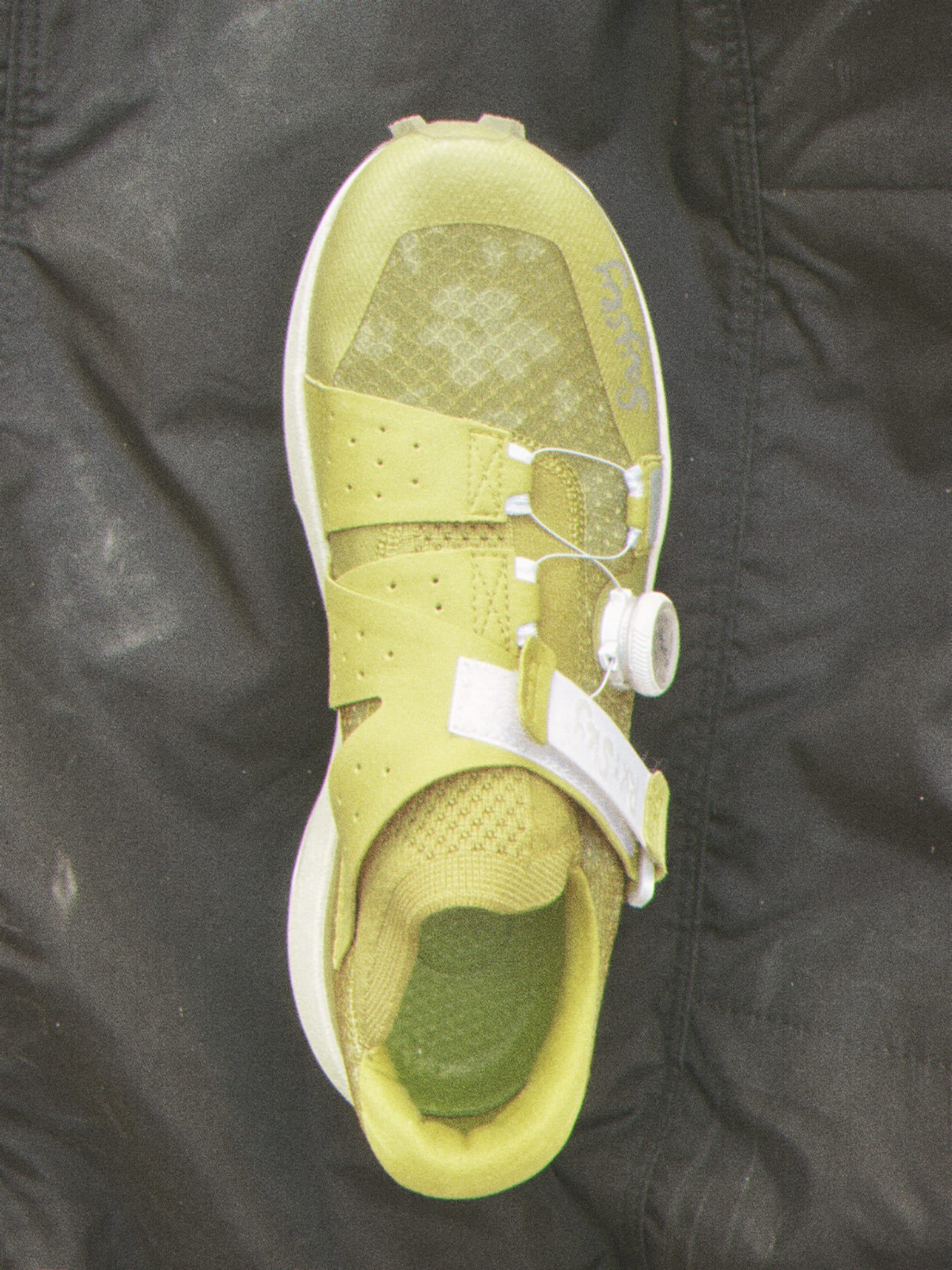
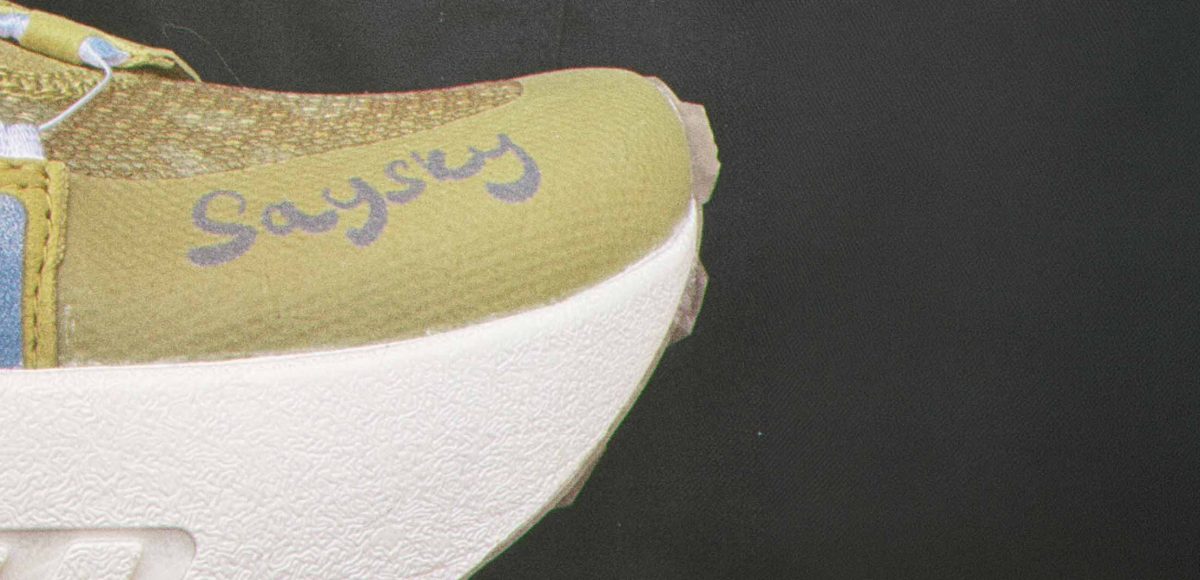
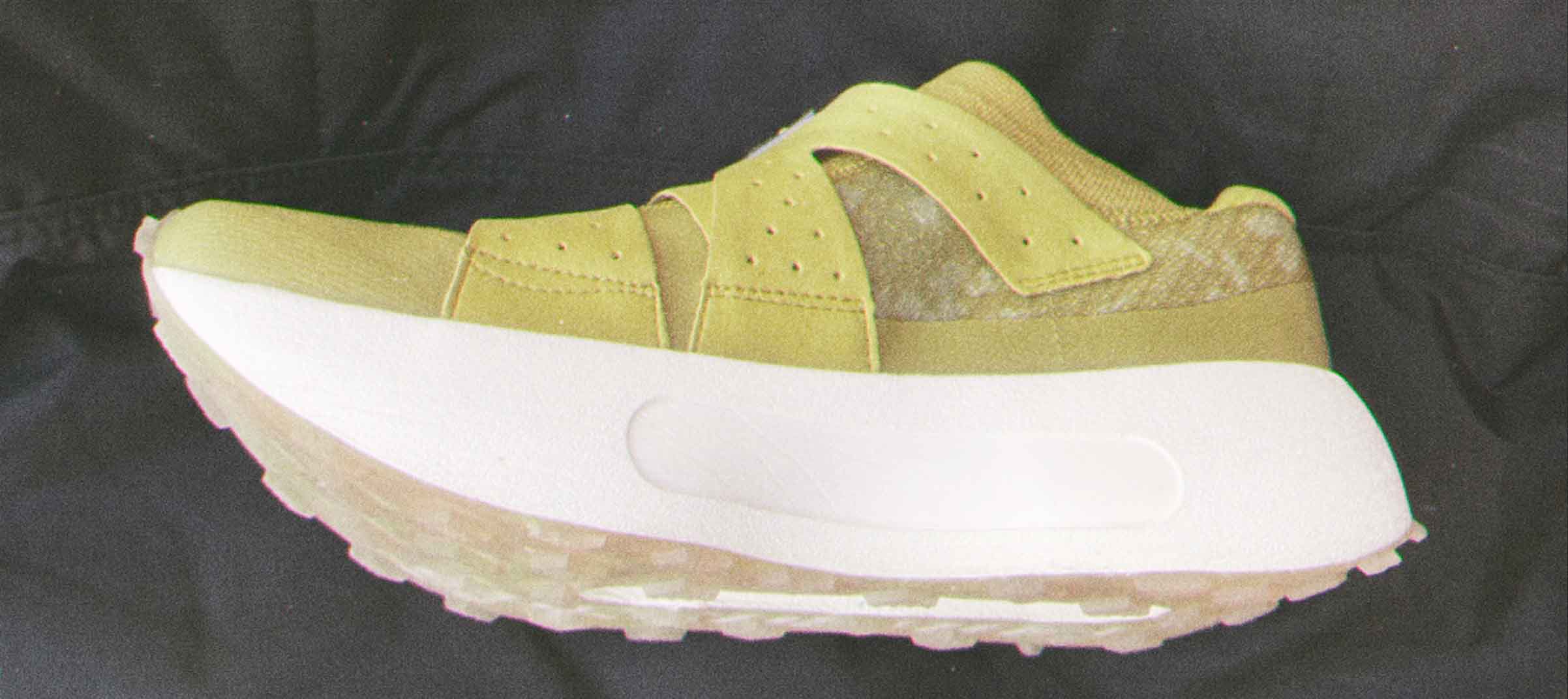
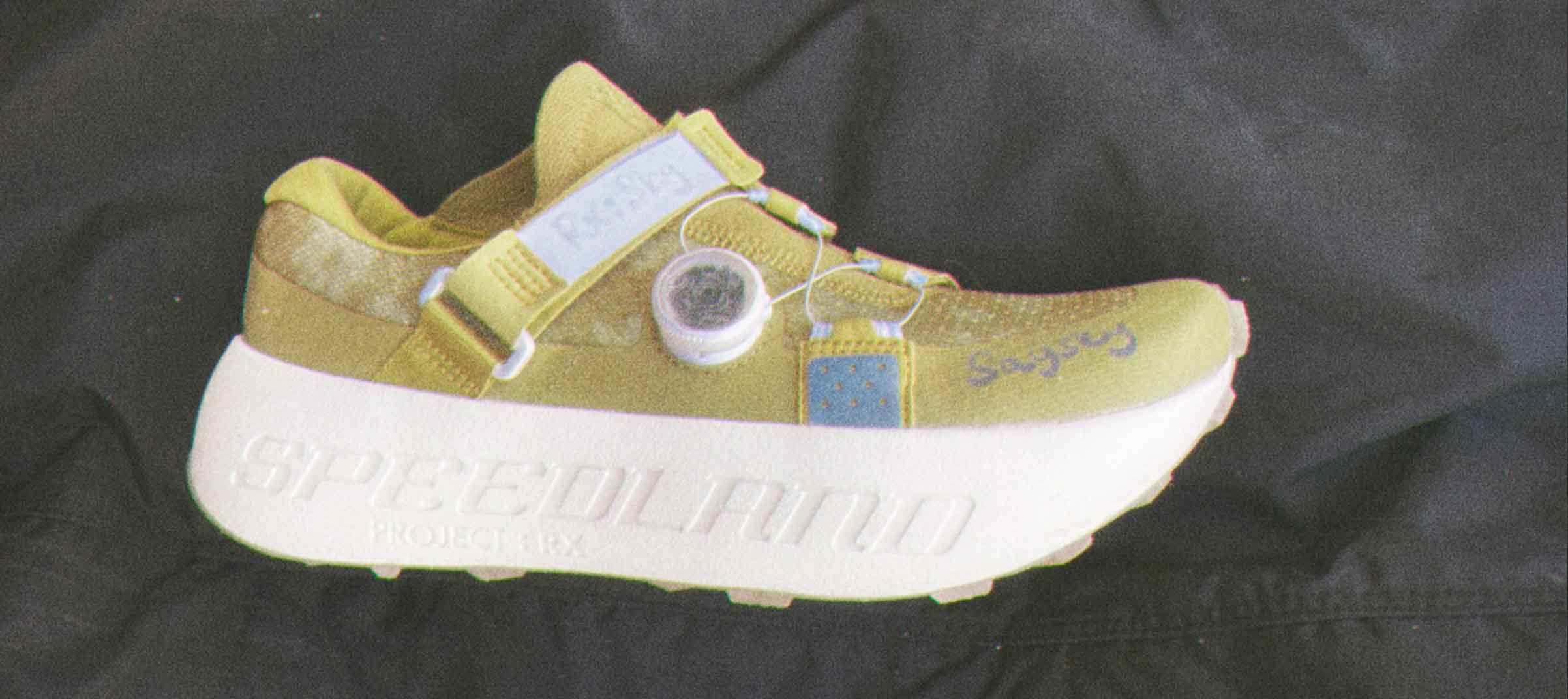
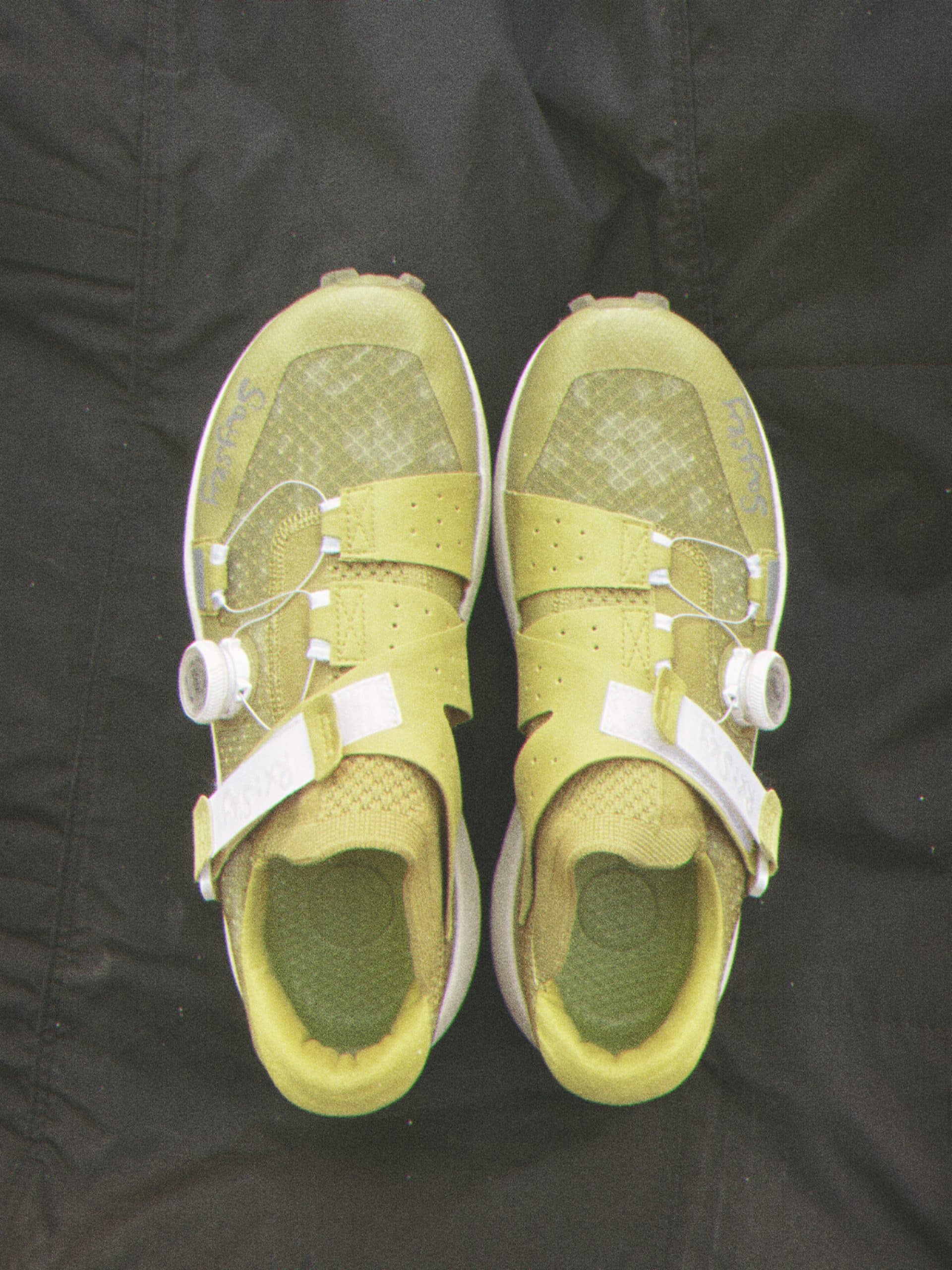
The shoe includes a removable ATPU drop-in midsole, a removable rigid carbon plate, a BOA PerformFit wrap, a reverse hook-and-loop heel strap, a spacer-mesh upper reinforced with high-tenacity fibers, and a Feathercast outsole with 3.5-millimeter lugs.
It can move between daily training and race-day use, depending on whether the runner installs the carbon plate.
It also glows in the dark.
The product is highly specific, visibly technical, and difficult to confuse with a generic collaboration created primarily for attention.
Speedland is fully legible within American trail running. The brand has earned credibility through product ambition, limited production runs, and a willingness to build expensive shoes without apologizing for the decisions behind them.
It does not collaborate with brands that have no standing in the culture.
A Speedland collaboration therefore gives Saysky something it has not yet created on its own in the United States: immediate context.
Speedland tells the American trail runner how to read Saysky – a serious, established company with enough product credibility and cultural relevance to belong beside one of the most respected independent footwear brands in American trail running.
More Than Borrowed Credibility for Saysky
This could be understood as Saysky borrowing Speedland’s credibility, but that interpretation is incomplete. Strong collaborations are not endorsements moving in only one direction.
Saysky brings its own value to the project: more than a decade of technical apparel experience, a recognizable visual language, deep roots in European running, and an unusually strong position inside Copenhagen.
Speedland brings access to a specific American audience that values product innovation, independent brands, and trail-running credibility.
Each brand makes the other easier to understand.
For Speedland, Saysky expands the shoe beyond the familiar visual codes of American trail running. For Saysky, Speedland creates a bridge into a market where the brand’s history has not yet become common knowledge.
The collaboration works because neither company needs the other to manufacture legitimacy. They need each other to translate it.
The American Opportunity
The American trail-running market is still relatively small compared with road running, but it is not insignificant. It is also culturally influential.
Trail runners tend to care about construction, materials, founder stories, environmental decisions, and whether a brand has earned its place. Products travel through a dense network of specialty retailers, events, athletes, media, and word of mouth.
That makes the niche valuable beyond its immediate size.
A brand that becomes credible inside American trail running can gain a level of cultural authority that is difficult to buy through conventional marketing.
The RX:SKY gives Saysky a credible point of entry.
It introduces the brand through product rather than explanation. It allows Speedland’s audience to encounter Saysky inside a context they already trust. It turns Saysky’s history, design language, and technical ability into something more immediately understandable.
Saysky does not need to become an American brand. It needs American runners to understand what Copenhagen already knows.
The RX:SKY is a smart step in that direction.