


Why Patrick Stangbye’s Zara Collaboration Sparks Fury and Why It’s a Triumph
Patrick Stangbye collaborated with Zara Athleticz on a line of running apparel that ignited a fury of conflicting opinions.
I love it, but it’s complicated.
I believe this is a triumph, and the reason doesn’t fit on a bumper sticker.
This collaboration is good, and more like it are necessary.
The Diffusion of Innovations Model
The Diffusion of Innovations Model by Everett Rogers explains how products and ideas move through markets. It always starts with Innovators (2.5% of the market), who grow ideas to a critical mass that catches the attention of Early Adopters (13.5%), who grow it for adoption by the Early Majority (34%), Late Majority (34%), and finally Laggards (16%).
Satisfy Running is a great example of movement through Rogers’ model. Satisfy dominated the Innovator market. In that growth, they captured the attention of Early Adopters, garnering investment and well-deserved attention for its brilliant positioning.
Look at Ed Hardy (!). Ed Hardy was a defining tattoo artist whose cult following turned into a massive movement, traveling all the way from Innovators to Laggards. By the time Laggards were wearing Ed Hardy, the visuals were well-defined, but the brand was so diluted that Innovators erased all evidence of association.
Impressions of Klattermusen,
Rachel Entrekein and the Story Trail Running Needed,
The Curious Case of Emory Atterberry
Patrick Stangbye isn’t the mass-market Ed Hardy. He’s closer to the original innovative, unique design language.
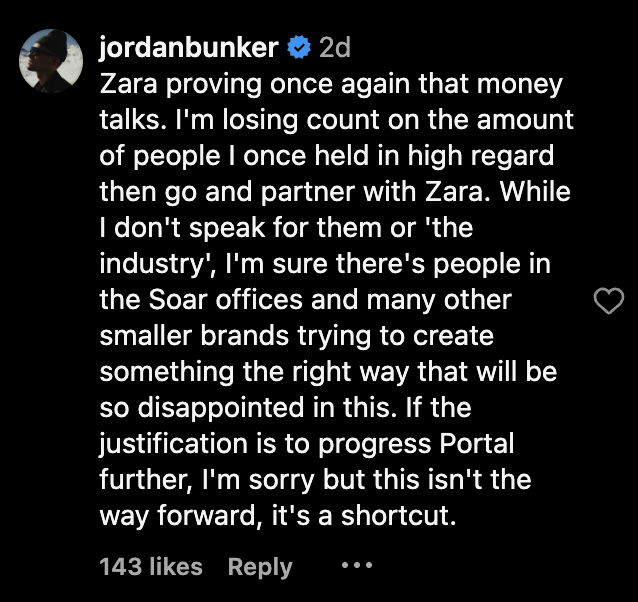
A Sense of Betrayal
When a product or idea moves from Innovators to Early Adopters, there is a vocal minority who don’t like it. The birth pangs of moving to the Early Majority feel like betrayal to them.
Patrick Stangbye amassed a following of early risk-taking Innovators. Innovators look to visionaries like Stangbye as a tastemaker and a champion in (a) challenging the status quo and (b) bringing something to the market that doesn’t look like everything else.
His style isn’t for everyone, but that’s the point.
You have to be willing to rethink function, utility, and design to understand him and the Innovators who follow him. Only a few people per one hundred actually care to do that. But it goes beyond simple caring; it’s their identity to be different.
On average, Innovators and their tastemakers like to upset the other stages of Rogers’ Diffusion of Innovations Model. Think about the Paris Fashion Week runway shows where models wear clothing that will never be seen on main street. Innovators celebrate its creativity, even if they never choose to wear it and even indulge in the judgement of those who don’t get it.

In this context, clothing is an extension of the person. Think of a punk rocker wearing a leather jacket with spikes. They wear it to be true to their tastes and to signal to the world who they are and how they might think.
Only one punk rocker came up with that style, right? Everyone else was just copying it. But that one who came up with it gave it a meaning the following Innovators wanted to wear.
It is very difficult to express yourself uniquely or honestly when picking from clothes worn by ~68% of the market.
And thus, Stangbye’s fans and followers do not wear Zara clothing.
Zara is 8 to 10 iterations from original design. Design innovation starts on the catwalks and changes to mass-produced iterations. Great design houses influence the good ones. The good ones influence J. Crew. Eventually, the style from the catwalk lands at Zara. By the time Zara is releasing anything, it has been proven in Innovator and Early Adopter markets. Colorways and cuts are proven by the time they’re on Zara’s racks. There is rarely anything cutting edge at Zara.
Maybe that’s one of the pain points. Running is outgrowing us.
Zara doesn’t take risks on Innovators because, among many other reasons, Innovators would reject Zara’s attempt on principle. More importantly, Zara can’t survive on R&D for 2.5% of buyers. It’s not their place in the market.
Imagine embracing a tastemaker who aligned with your Innovator ideals and one day you see a collab post on Instagram where that person is now in business with Zara.
Fast fashion.
The person you once championed, reposted, and purchased goods they endorsed has now enabled an enemy of your values to sell more product and become cooler through association.
The person you loved just showed the world that it’s okay to love something you hate and made a mass appeal to the Early Majority (34%) and Late Majority (34%).
It feels like betrayal on a visceral level.
I don’t believe judgement directed at Stangbye is personal.
There is only one reason for his sin: money.
He sold out.
Stangbye was supposed to contain his life and career to what it has always been.
No change.
No new imagination.
No growth.
No personal life goals.
No intrigue for what happens if he enters the Wardrobe.
There’s a frustration with the reality that sometimes our heros and North Stars make decisions we don’t like. They move on from us. They dream in a new way that contradicts the old way. Or worse, they give us nothing. No explanation which causes us to doubt if anything they ever did was real or true or legit.
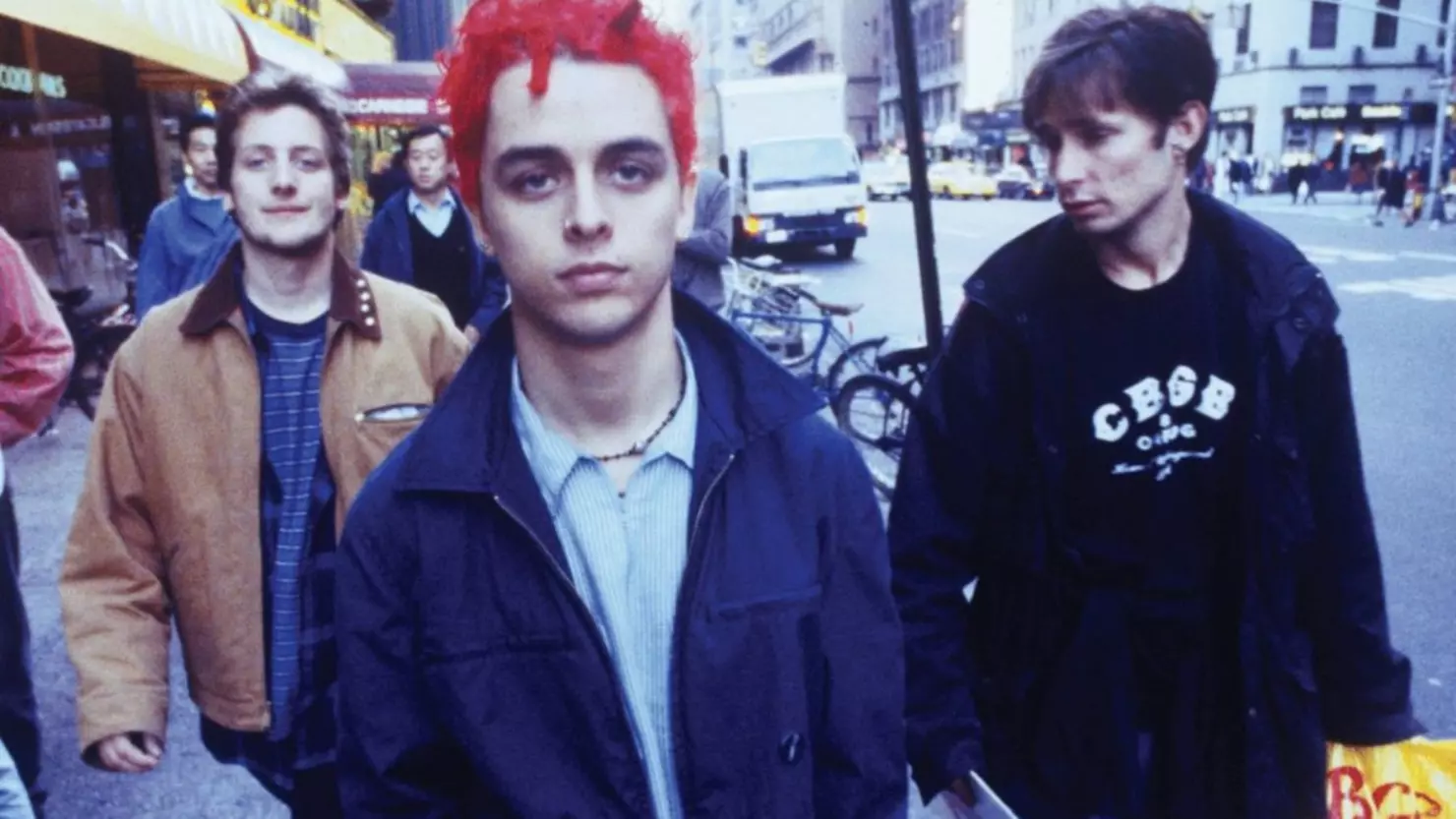
Billie Joe Armstrong as a North Star
Green Day “sold out” in 1993 and signed a contract that led to the release of Dookie. The headlines were brutal. Fans staged walkouts at shows to protest their decision to get paid for their art in a way that enabled them to make more music true to their vision.
Bigger crowds were seen as evil. Green Day was supposed to stay on stage at 924 Gilman Street, living together in small apartments, scraping money together for the rest of their lives so Innovators could keep their personal identity intact.
On some levels, Patrick Stangbye is Billie Joe Armstrong here. He’s had a successful career challenging norms, but his move to a broader market sparks similar accusations of betrayal.
Beyond the Sellout Narrative
Imagine not celebrating the success of another person.
Worst of all, what if it was for the money? Exclusively.
Have you asked him why he did it? You saw Zara and Patrick Stangbye working together and likely made some non-generous assumptions.
Can fast fashion be critiqued? Absolutely. Is it perfect? Far from it. Am I defending it? No chance. I’m Switzerland for the sake of this article which I’m sure is frustrating for many of you as this is your principle beef.
We have selective outrage. We’re comfortable ignoring the supply chain of our electronics, but this collaboration gets public comment?
Even the most cynical explanation (which could also be the most generous one) is one I celebrate for Stangbye. Go get paid. Congratulations. Creative life is a grind. It’s hard and beautiful. Van Gogh died broke and never got to see his work celebrated. What a gift when our work gets validated like this.
I hope this gives him what he needs to keep creating beauty for us.
Stangbye’s move here expedites him deeper into the public consciousness as a personality and designer for runners, like Satisfy is doing through its move to Early Adopters and beyond, in a way where he’s maintaining creative integrity, unlike the Ed Hardy movement, whatever that was.