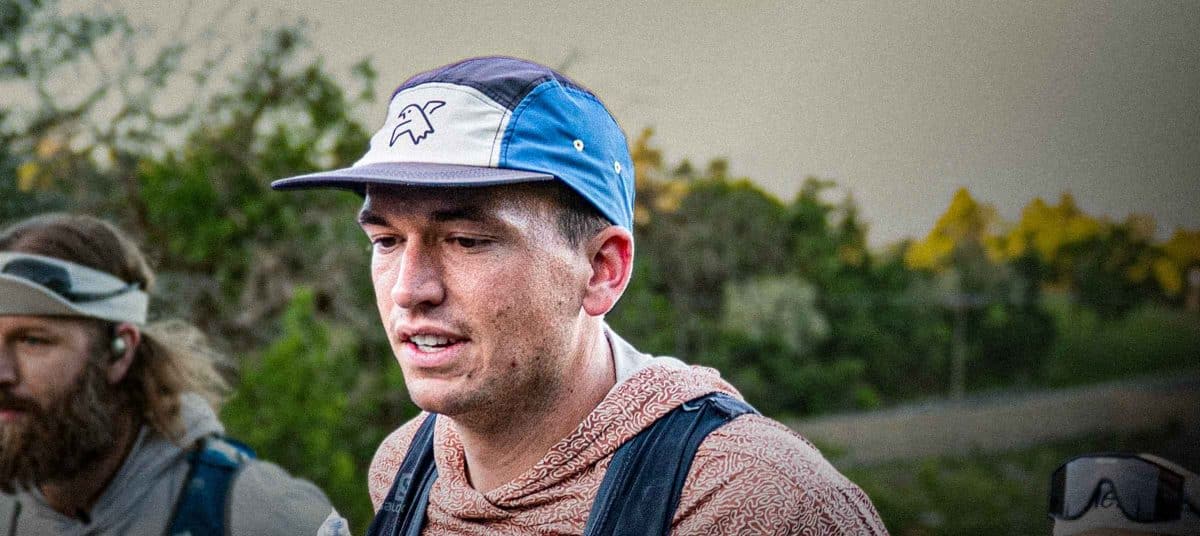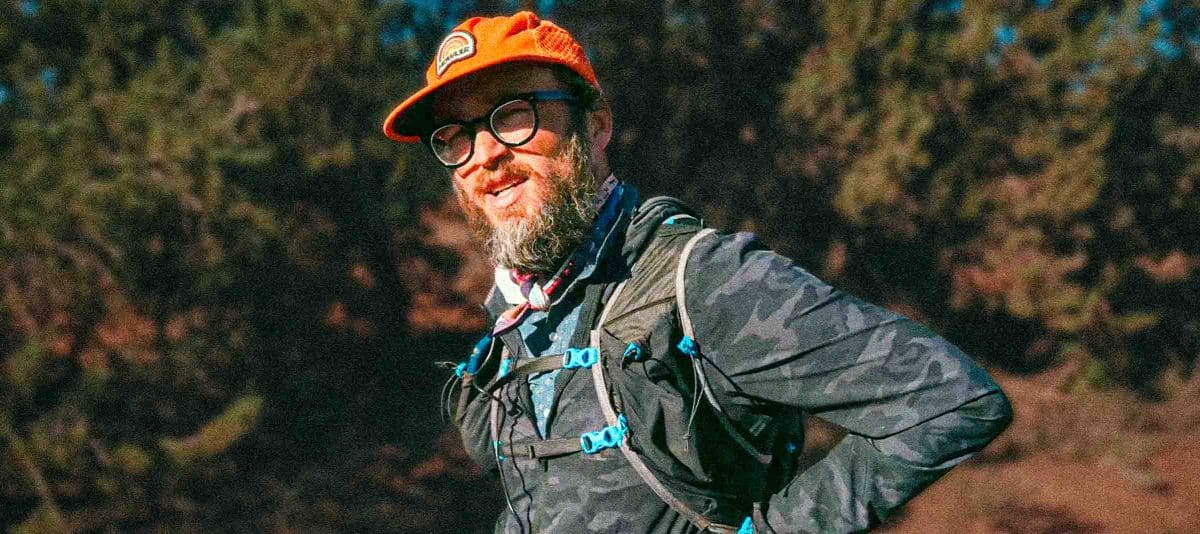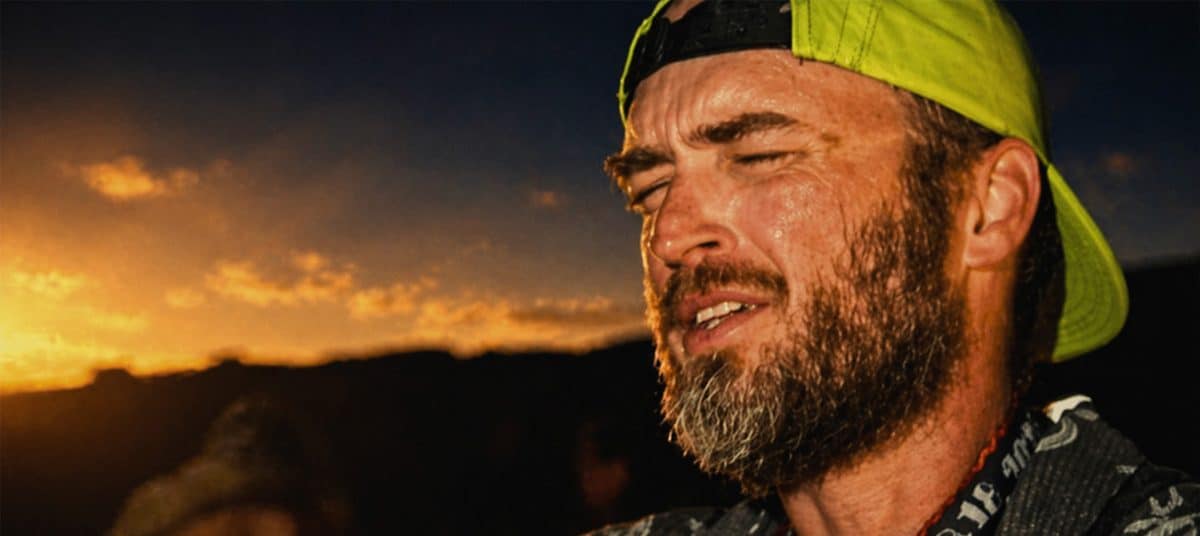



Ultrarunning is evolving and growing fast and with that growth, ultra running feels different. Josh digs into how the sport is changing as it becomes more competitive, more visible, and more professional than ever before and asks whether something essential is being lost along the way.
From duct-taped water bottles and campfire start lines to global races with thousands of runners and highly engineered gear, this episode explores what that shift really means. From the rise of new brands and technologies to the increasing professionalization of the sport, the conversation looks at what we’ve gained—and what we might be leaving behind. Not as something to judge, but as an evolution that is reshaping how ultrarunning feels, who it’s for, and where it’s going next.
For runners thinking about how ultrarunning is changing and what that means for the future of trail running and ultrarunning.
Topics / Timestamps
- 00:00 The Evolution of Ultra Running
- 02:23 Defining the Charm of Ultra Running
- 07:15 Ultrarunning is Really Two Sports in One
- 11:54 Professionalization vs. Community
- 17:00 The Standardization and Predictability of Ultra Races
- 23:43 The Trade-Offs of Growth – we’re losing something
Resources / Links
- La Barba Coffee
- ACG
- Gorge Waterfalls
- Mountain Outpost
- Western States
- Leadville
- Wasatch 100
- Barkley Marathons
- EcoTrail Paris
Related Episodes
Presented by Kiprun.
Transcript
Show Full Transcript
Ultrarunning Feels Different
Borderlands (00:00.47)
Ultra running feels different even compared to just a few years ago. I I love the old stories, duct tape on handheld bottles because hydration packs didn’t exist yet. You take that duct tape and strap a water bottle to your hand. You put that duct tape on blisters. You go to the thrift store for race kit, know, stuff that’s that you’re going to get to last a few years. You’re not going there to, know, ironically you’re going there because that’s where you can get some stuff.
go out and do what you want to go do. And not that long ago, starting lines were full of people solving problems their own way, with their own engineering, a lot of DIY. Runners brought food to contribute to the aid stations in a pile and it would get distributed, you know, to all the aid stations on the trail there. Sometimes the entire field could fit around a campfire the night before the race. I had Scott Jurick on, he talked about how he and Carl Speedgoat would, you know, sit around the fire with the other people who going to be racing the next day.
Talk some trash, was just, it was a small field. And I’m about to run a race called Eco Trail Paris with 19,000 runners. A trail run, trail race that starts outside of Paris, into the Eiffel Tower with 19,000 runners across like seven or eight distances. I’ll have $200 pair of shoes, $150 vest, $25 pair of socks, $30 headlamp, $60 hat, $120 in nutrition, $200 pair of sunglasses, $250 watch, $100 pair of shorts.
$80 shirt. I mean, even the 50 miler that I put on costs $240 right now after the final price hike. So I’m not saying that this is a problem that’s happening out there and we need to rail against it. Like if this is a problem, well then I’m a part of the problem. So is the charm gone? And if it is, is the trade off worth it?
Podcast Intro
Borderlands (01:53.795)
The Borderlands Trail and Ultra Running podcast presented by Kip. Ron, my name is Josh Rosenthal. I am the host and the founder in that race this week and I will be running in the Kip Summit Max’s and possibly trade off into the Kip Summit races. I’m just so stoked on both of those shoes. Real quick, if you’re getting something from this, can you give us a follow and five stars and all that good stuff? It helps more runners find the show and helps us grow this thing. All right. Ultra running is losing its charm. Let’s talk about
Defining “Charm”
So if I’m asking whether we’re losing the charm, I should probably define what I mean by charm. For me, charm and ultra running has always been rooted in the community. It’s a sport where the average runner matters just as much as the podium runners. And I’m not talking just like in God’s eyes, I’m talking on race day too. You felt it, you felt that everybody was just as important. It’s the DIY side of it, people figuring out.
taping their feet, hacking things together, solving problems their own way. And it’s the characters. I mean, everyone kind of looked different because everyone was piecing it together uniquely more or less, right? They were different, a little unkempt, a little chaotic. Ultra running used to look like Cosmo Kramer. And now it looks like Jerry. It’s more polished.
more put together, maybe even a little uptight, somewhat of a germaphobe. The outfits are dialed, and yes, there are outfits now. You know, tell that to someone 30, 40 years ago that at some point they’re gonna be having these racing outfits. Maybe they would have seen that. Aid stations are organized, even branded, and sometimes even run by companies instead of runners. And look,
I think most of that is well-intentioned. At my race, we talk to companies about helping us with our aid stations or our finish line. I think it’s all well-intentioned. I’m not saying it’s not. The race director needs that money and needs that support. People are trying to make the experience better. But it also means there’s probably a spreadsheet somewhere or a Zoom call where someone is talking about the ROI of an aid station.
A Different Feeling
Borderlands (04:21.144)
And that’s just a very different feeling. I’m not saying bad, I’m not saying good, I’m not placing judgment on it. I’m just saying it’s a different feeling for the sport. It’s like coffee. I started a company in Salt Lake City called La Barba Coffee. It’s still around though, I sold my portion back in 2020. Getting into coffee at one point, at the time that I came into coffee, I’m doing the same thing. I did the same thing to coffee in Salt Lake City that people are upset about.
or that maybe some people criticize of what’s happening in ultra running. I brought some level of preciousness to coffee and I have completely, let’s say, abandoned that way of thinking about food and coffee where every ingredient has to be explained. I especially hated in France when I go to a coffee shop and they have three or four different espressos and they wanna explain each one to me. There was a time where that was the real movement.
At this point, I just want a really good cup. I still go to specialty coffee shop, but the way that it grew, it grew in a way where it became precious, breakable, fragile, ultra running though is not those things. It is growing in a similar way that coffee grew. It was once no fuss, and now, you know, a lot of fuss. The gear, the methods, the subscriptions, all that sort of stuff. It became a big system.
Cost, Gear, and Growth
So what used to be a couple of solid options is now like constant production cycles, new models every year, endless upgrades. And I’ll say this a lot in this episode, that’s not awful. Like I like it. I like the new issues. I like to see what they’re trying to do. As Inky Steve had talked about like, hey, he loved the 2020 Vaporfly Next Percent. He did not like what happened after that one. Like, so sometimes these iterations cause problems, but in the end, businesses get stuck in this.
you know, new model, endless upgrade cycle. But here’s the uncomfortable part for those of you who don’t like it. Prices are going up because you are paying for it. On the last episode I did, I got this comment, you know, summarized as every running brand tries to tell us a lie. And we take it hook line and sinker. And we end up buying more gear because of the lie of the running brands.
Responsibility and Reality
Borderlands (06:45.25)
Now I disagree with that on principle in so many different places, but yeah, I’ll now acknowledge, okay, there’s some truth to that. They’re selling an idealized life and experience that they can’t possibly follow through on. But at the same time, they’re not opening your wallet for you. You are. They are not stealing from you. You are not a victim. Prices are rising because you are choosing to pay them. And to be clear, this is better.
gear, like improving my ability to go out there and run well and run further and run how you know I dream of running. This is better, but it’s not the same. It’s just not the same. So to make sense of this, you have to almost split this the sport into two. I’ve been saying this for a long time. There’s two sports happening at the same time on any given trail at any given race on any given day.
Two Versions of the Sport
On one side, you’ve got the runners chasing the podium. know, every race has them. know, Western States has the super, super speedy ones, but you know, even, you know, XYZ Ultra that has 35 people, there’s gonna some in there who think that on that day that they can win the thing. And so they’re gonna race them. They’re thinking about efficiency. You know, their training has words like marginal gains in it and you know, lighter gear and faster transitions at the aid stations. And as they improve, the sport starts to give back to them.
You you saw this last year with Caleb Olson a little bit and his sort of meteoric rise is yes, he’s been in the zeitgeist, he’s been mentioned a lot, but last year with his major wins and especially at Western States, you know, the sport started to really give back to him. And maybe if you were to ask him, maybe he’ll say it’s been giving back for a while, but last year we all saw it. It starts to give back. So over time, I think,
You know, they get the prize money, they get the gear, they get free entries and sponsorships and all that. And over time, the really fast runners, the speedy ones, the ones putting on the great shows, get disconnected from the cost of participating. And that’s not new. mean, Messi doesn’t know what nosebleed tickets cost. Doesn’t know what front row tickets cost probably. It’s not his job. His job is to perform. It’s not Caleb’s job to know how much
Borderlands (09:08.982)
any of the new ACG shoes cost, it’s his job to just go run fast. This is ultra running now. This is where it’s going. And when that happens, everything shifts. The industry builds for performance. Gear becomes more technical, more expensive, and people want access to what the elites are using. The marketing puts the elites on display. The demand raises prices.
Resets expectations and that raises the baseline cost for everyone. That’s the chain. Elite performance elevates product, higher expectations, and then higher cost. And then there’s the other side. There’s the dirtbags, the runners doing, you know, just a couple of races a year, figuring things out, not optimizing for everything. Sometimes not optimizing for anything. That suffer, that suffer fest is what they want. They’re fit, but they’re not like optimized. You know, that’s me. Just trying to finish, you know.
You’re just wanting to be out there. You’re chasing cutoffs all day, and this is where it gets uncomfortable though Because that version of ultra running is getting harder to access Entries are more expensive again. You know I’m contributing to that. I’m not saying again that it’s bad I’m just saying it is entries are more expensive much more expensive where once you could put you could get in six to eight Ultras a year as someone with an average job
You are not doing that now. You’re having to pick and choose the races that you go toward. And as you pick and choose the race that you go to, a lot of people want the same races. So demand goes up, supply is capped. So the prices go up.
It’s complexity, mean, gear expectations are higher.
Borderlands (10:51.566)
Okay, review this spot, not good.
Borderlands (11:00.31)
Entries are more expensive, gear expectations are higher, even if unofficially, and the cost of just showing up keeps rising. And this isn’t just inflation, it’s scale, it’s complexity, it’s the system growing. A lot of people wanna blame it on inflation, or they wanna blame it on increase in permit costs. It’s not just that. The bottom line is that you’re paying more, that’s what it is. A race director has increased the prices to what they have increased them to because you will pay them.
and it’s not greed on their part, putting on these races is very complicated. So the race director has to say, what is it worth to me to put this on? If I’m gonna give up, you know, 200 hours of my year to executing this race, it’s gotta be worth something to me. And yeah, maybe some are purely philanthropic, but others, it’s an opportunity cost. And you’re looking to say, hey, if I don’t, if I put this much hours into the race, I gotta make some money off of it.
pricing it accordingly, but you are paying it. So in some ways, the sport is no longer being built for the people who built it. That’s what, that’s the hard part. And so what happens if the people who built it start to disappear, if the ethos that built it starts to disappear?
There’s a lot of talk about professionalization and I’m for it. Athletes getting paid is good. Better performance is good for me. The fan Josh, the fan wants better performances, but there’s a paradox. The more professional it becomes, the more it starts to feel like work. Contracts, expectations, results. It’s a job and again, that’s not wrong, but it creates distance. The best runners used to feel close. They used to feel within reach. Now they feel separate.
they feel other. And as a fan, of course they should feel other. Then the same way that when I was a kid that Emmett Smith felt other, I want them to feel other because that means I’m getting something great. The gap used to feel though like, you know, junior high performance to a college performance. So there was distance, but as a junior hire, I could imagine, hey, in five or six years, maybe I can get close to that. Now it feels like
Borderlands (13:27.034)
the chasm between Little League and the pros and all the attrition that happens in between that makes it to where, you know, that Little League kid dreaming about being in the pros, you you have 0 % chance of going out and competing with Hans. I don’t care who you are. The chances are very low of you doing something like what we all witnessed at Black Canyon this year. Absolutely incredible. You could line up to them at one point, next to them at one point, and now you’re watching them.
And the conversation shifts as well. mean, more focus on data, splits, metrics. I mean, you see it in the nutrition companies putting out the metrics. Here’s exactly what they ate. Here’s how it went. This is what they consume, the splits, metrics, podiums. And that’s interesting, but it’s a very, very, very small slice of the sport that is eating up 90 % of the attention. Because most people aren’t racing for the podium. They’re just trying to finish chasing cutoffs.
Because I’ve got this heel issue, I think at the 120K that I’m running this week, and I think I’m gonna be chasing cutoffs, and I don’t care, I just wanna be out there. I wanna have a good day. And good is in quotation marks. I wanna suffer and I wanna endure. As the sport professionalizes though, does it start to forget who it was built for? So we see that the people that it was built for are starting to disappear, but now does it also forget?
Isn’t this a problem, right? Like, you start to forget the foundation and that becomes a problem. You start to forget the thing that established it. Now, I’m not saying you have to treat it as holy or sacred, but I’m saying to become so detached from it is net bad, in my opinion.
There’s another shift too though. Races are starting to feel the same. You can run in the Alps or the Rockies and they’re different on paper and of course the views are different and we’re here for the views. The back of the pack are here for the views. I wonder if the people chasing the podium at these races get to enjoy the views. I I remember my last 100 mile attempt that I actually finished the Zion 100 mile in 2024.
Borderlands (15:38.831)
got to stop and sit with my buddy Alex because we knew that we were going to make it. We were going to make it. And so we, you know, at hour 34, we just sat down and we just on the trail and just enjoyed being in the Zion desert. And I wonder if the front of the pack gets to enjoy the view. I know that’s not the value. I get it. I get it. But I just still wonder, do they get to enjoy it? If the, the, one of the core draws of trail running was to get lost in nature.
and to go run hard and to go work hard in nature. that’s at the foundation of the dirtbag ethos that established the sport, I just wonder if the athletes these days really get to enjoy it. Now I’m sure they do before and after. I’m not questioning their love of nature. I’m just saying, what’s that moment like for them in race?
So the braces are different on paper, sure. But the experience, it’s more standardized. It’s same structure, same branding, same flow. Because you have to for the elite athlete experience, because there’s a lot hanging on it for the elite athlete now. You mark the course poorly. We’ve seen this happen in road marathons. How in the hell is this happening in road marathons? LA Marathon, the guy goes off course. Another notable, what was it? Some national championship, can’t remember exactly. The front of the women’s pack.
goes off course and the woman who is who is Most likely gonna win there toward the end didn’t win because they went off course Like I don’t know how that’s happening in road, but in trail either it’s hard trail marking is hard Especially if you’re in highly trafficked areas and there’s people who don’t like to see those flags They want to pull them out like they do at my race You know the Runners have a really high expectation of excellence at these races now and maybe that’s also the generations coming up
that are just, you know, coming up with new and different values, but it’s the same flow. I mean, the benefits are real of all of these improvements. Things run smoother. They’re more predictable. More predictable is a good thing, especially if you’re having to buy an insurance policy for your race and you have emergency plans. You want some level of predictability. You don’t want improvisation. You don’t want jazz out there. You kind of want pop music, but it also feels just curated in a way that I don’t love.
Borderlands (17:56.579)
more controlled and something gets lost in that.
because what made races special was how different they were. The quirks, the rough edges, the personality. Think about the difference between Western States and Leadville and Wasatch 100, these iconic American West races. They were the same in that they were going hard in the mountains, but they were all their own personality. This is the heritage race that I don’t wanna lose, that I feel like we are losing in this professionalization, not only in the professionalization, but-
the old guard sort of aging out. And in my interview with Laz Lake, we talked about what’s the future of Barkley Marathons as he takes his thumb off of it, as he grows older and is unable to execute. What’s the future of these great heritage races? I’ll put that link in the show notes because I think it’s interesting to hear how he’s thinking about it with Barkley. But what about Wasatch? Western States has this wild board that has all of these values and they’re going hard after something that’s, you know, their own thing. You know, Wasatch, I know it has a board.
Leadville all of this but these heritage races we want them to be preserved as they were I don’t want to see them modernize and then Preserve I want them to preserve for what they were and I think to some degree Leadville makes that effort and at the other on the other end of that lifetime makes it hard, know that relationship and That investment they need a return on that, right? So you have to ask are we trading uniqueness for consistency?
That is always what happens when something scales. As you go from handmade to factory made, you lose uniqueness. And by design, I mean, that is by design because think about going to Chick-fil-A in America. You want to go to a Chick-fil-A in Texas and go to a Chick-fil-A, maybe the one I got fired from twice when I was 16. You want to go to that Chick-fil-A and then go to one in Atlanta and go to one in Salt Lake City. And you want them all to taste the same. That is critical from a brand.
Borderlands (20:01.654)
standpoint is that you have this consistency, this expectation that is constantly being met. What you don’t get is, hey, in the back kitchen at the Chick-fil-A I got fired from, we were allowed back in what, 98, 97, we were allowed to make our own sandwiches with the ingredients that were back there. Super unique. Maybe not good, but super unique. So you lose that quirk, that uniqueness for the sake of consistency.
You don’t want to go to Chick-fil-A on Slide Road in Lubbock, Texas and get the Josh special and then go to the one in Atlanta and get this other thing that kills it. So there’s this consistency. And I’m not just talking about one organization, just UTMB, just RVIPE, but I’m talking about the circuit in general that grows as a result of the modernization and the professionalization of Ultra. So are we trading uniqueness for consistency? Well,
At the same time, there’s a counter movement, smaller races, fat ass runs, community led events, know, the speed project, ethos, whether or not it’s actually just speed project, they’ve influenced a lot of unsanctioned Community led, people keeping it simple. And I don’t think that’s accidental. I think it’s a response, like that some of those races, some of those events, some of those ways of doing things are turning up the volume. But they can both exist.
That’s the beauty of this. They both can exist. I’m for growth and I’m for the charm. I just don’t think that those have to cancel each other out. The problem becomes when only one takes off and the other gets overshadowed by it and is unpreserved. And this is what I think Laz Lake does well and what he’s the poster child of is that he is the poster child of the resistance to modernization and the resistance to professionalization and not
because he’s counter-cultural in any way. It’s just because he’s doing things the way that he’s always done them. Maybe in some ways it’s because that’s how he’s always done them. That’s what makes him unique. The big races, the small races, the polished races, the weird races, but you know, they can all coexist. It doesn’t happen automatically though. It depends on what you choose and where you race and what you support. I hope to run a UTMB, I mean, I ran Speed Goat.
Borderlands (22:25.326)
pre UTMB three times, then UTMB picked it up. didn’t not run SpeedGo because of UTMB. I invest a lot of money to go to the UTMB main event because I love to watch it as a fan and professionally it’s an important place to be for me. There’s a new UTMB race in Utah and when I move back to Utah this summer, I’m excited to go up to, I’m blanking on the name of it, but the new UTMB race at the resort up in Davis County, I’m excited to go there and just.
be around the energy. So I’m not saying, hey, only choose those rural races, only choose those sub 100 person races. But I am saying be intentional with what you choose, what you support, because now it is a choice. Ultra running isn’t dying. It’s the inverse. It’s the inverse of dying. don’t know, is thriving the right word? Is thriving the inverse of dying? I don’t know. But it’s certainly growing. It is growing. I mean, there’s objective resources that you can see that race registration is still growing. I don’t know if Ultra Sign Up publishes any data on the
the increase of registrations in America. I’d love to see some of that. I have some resources on objectively on race registration and the increase in apparel and all that sort of stuff. I mean, we’ve gained a ton from this innovation. We’ve gained a ton from the professionalization. It is fun to see Nike doing something, finding its place after fumbling around in the dark for so long, finding a point of entry that
you know, the zeitgeist is interested in with ACG. That’s fun. We’re going to gain something from that. Whether you like Nike or not, their massive investment into what is it? Gorge waterfalls or massive investment into races, their massive investment into athletes will elevate that and the fan experience will grow with it.
So we’re gaining from this. I’m not saying we’re not. Access, performance, opportunity, but we’re losing something too. And that’s weirdness, simplicity, and charm. And maybe it’s worth it. Honestly, in a lot of ways, I think it is. It is worth it. But only if we’re honest about what we’re trading. Because that version of ultra-raining, the duct tape, the pre-race campfires, the…
Borderlands (24:41.23)
characters, the uniqueness, the engineered garments, and I’m not talking about like the fancy engineered garments. It’s still out there. It’s just not the default anymore. And is that sad? Maybe it is a little for us who’ve been around it a little bit longer. But for the new runners, I don’t think it’s sad. I mean, I think it’s maybe fun for them to hear about. And again, I know it still exists in places, but it’s just the zeitgeist is around the professionalization aspect of it. But there’s still a local race, no doubt.
in your neighborhood, in your, you know, if you live near the mountains, there’s an ultra race somewhere near, that is charming. And, I mean that in the most complimentary way possible. And also mountain outpost is putting a camera on some of the most interesting, most fun races around UTMB. Same thing. They’re, growing their coverage of it. So it’s expanding, but it is two different sports happening on the same trail in the same race on the same day. Those, those folks.
rushing for the podium and then the rest of us fumbling around in the dark also.
Closing Question
Borderlands (26:37.26)
But what do you think? Is ultra running losing its charm? Is it worth the trade off? I’d love to hear from you in the comments. Thanks for hanging with me today and we’ll see you next time.