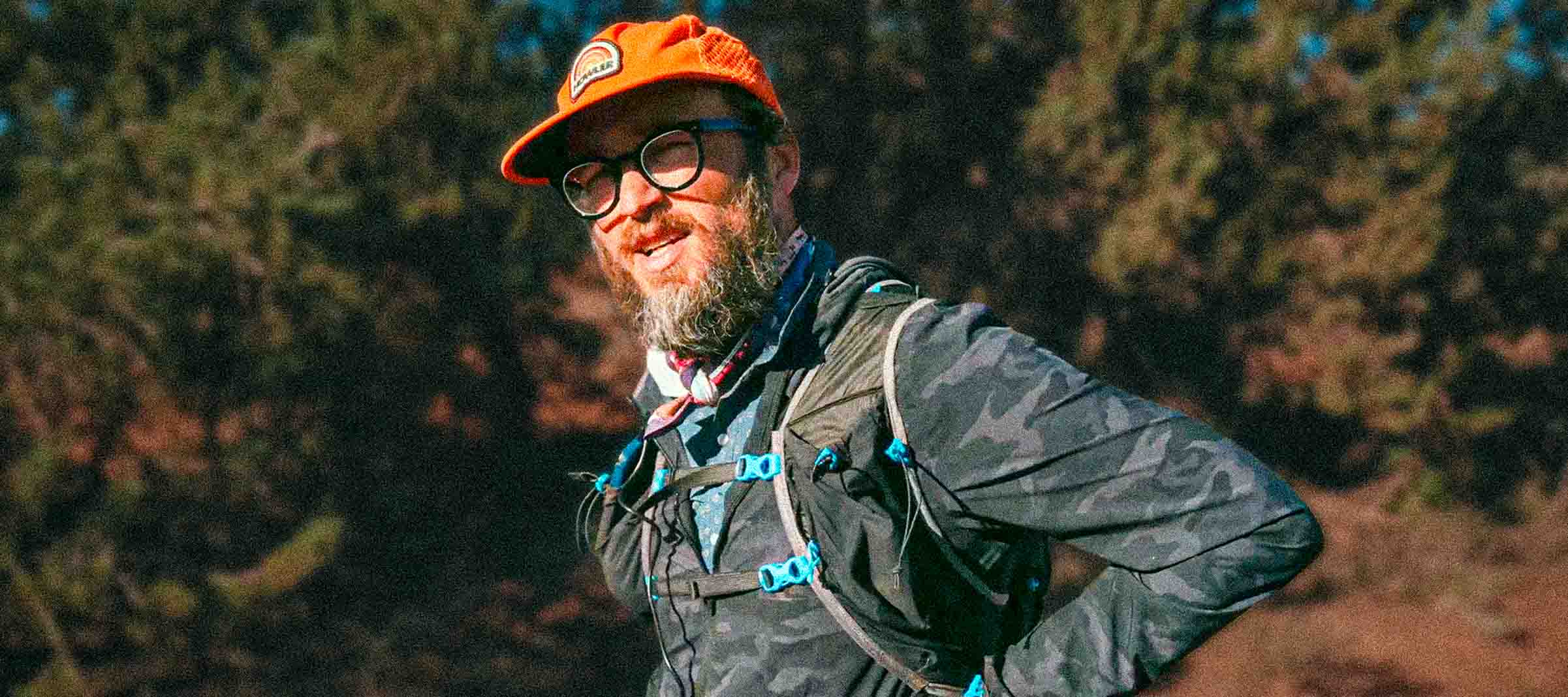


I knew I liked Clint Anders as soon as he walked into Bread Fellow in Old Town Fort Collins.
He wasn’t wearing the retired daily trainers most runners live in long past their prime. Instead, he had on a worn-in pair of Red Wing Iron Rangers. Most guys start their boot education there for a reason. The Iron Ranger is the quintessential American work boot turned heritage staple.
[Run the Salt Lake Foothills Trail Races – 10k | Half | 50k | 50M]
Two weeks ago, I didn’t know who Clint Anders was. I’m going to guess you don’t either. But after an hour talking with this relatively unknown ultrarunner, I started to think that might soon change.
I stumbled on his name while scanning the entrants list for the Javelina Jundred, a rolling 20-mile loop through the Arizona desert and a Golden Ticket race for this year’s Western States 100. When I saw Fort Collins beside a name I didn’t recognize, I paused. I’m from Loveland, just one town to the south. How had I not heard of this guy?
At Borderlands, we’ve always tried to balance both sides of the sport. Yes, we’re covering more of the elite field these days—the races, the brands, the athletes whose names show up on start lists around the world—but we’ve never stopped celebrating the everyday runner: the ones squeezing in miles before work, chasing local goals, finding community on the trails. Clint Anders lives in that space between. What does it really mean to be “elite”? Sponsorship? Travel? Followers? Maybe not. Maybe it’s the quiet precision of people like Clint, those training with professional discipline while holding down real lives.


Clint Anders and I met on a cool fall morning in Fort Collins and talked through the shape of his season and the life wrapped around it. Nothing about him felt hurried. He carries himself with the same calm that defines his running—steady, structured, deliberate. He’s thirty-five, married, and works full-time as a landscape architect. His wife, Sophie, also runs, so their weeks often move in parallel, each fitting training around work and life in a way that keeps them connected but independent.
He came up through the track system at Sam Houston State, racing the 800 and mile. His senior year was his best, the one that showed what could happen when everything clicked. That foundation carried him toward the roads after college. In 2019, he ran a 2:20 marathon, close enough to glimpse the Olympic Trials standard. He’s still chasing it.
The goal hasn’t faded; it’s evolved. It isn’t about a contract or a title. It’s about seeing how close he can get to 2:16 and whether years of consistent work can still lead somewhere new. That same curiosity runs through his ultrarunning—the pull to find out what he’s capable of, not just how much he can endure. The marathon discipline remains the template: even pacing, clean effort, no wasted motion.

For the past six years, Clint Anders has been coached by David Roche, one of the most respected names in American ultrarunning.
Roche isn’t just a coach; he’s an elite athlete in his own right who’s proven his own methods on the sport’s biggest stages.
In 2024, he won the Leadville 100 and broke the course record, then returned in 2025 to lower it again.
That kind of precision carries weight with Anders, whose own training reflects the same measured logic: roughly ninety miles per week, long runs before dawn, targeted afternoon sessions, and recovery scheduled with the same discipline as any workout.
Never Summer is the race that roots him. The 100-kilometer course climbs more than 14,500 feet between Fort Collins and Steamboat Springs and sits at the heart of Colorado’s mountain-running community. It’s part homecoming, part trial by altitude. Clint DNF’d there in 2019 after misjudging the weather and fueling. This summer he came back and won—methodical pacing, steady fueling, patience built over years.
He figured that would end his season. Then Sophie suggested Javelina: five twenty-mile loops in the desert. It’s the opposite of Never Summer—fast, flat, exposed—but the rhythm suits him. His background in middle-distance and marathon training makes him efficient on runnable terrain, and his Colorado base provides the durability to hold it. Sophie’s push mattered. She doesn’t hand out compliments easily, and when she called his Never Summer race “pro-level,” he listened.
Javelina’s Golden Ticket designation raises the stakes, but Anders treats it differently. The ticket itself doesn’t matter to him. The meaning would be in what it represents—a chance to live the Western States experience from Olympic Valley to Auburn, surrounded by the friends who’ve shaped his running life. Whatever the outcome, the next week will look the same: another early morning, another quiet test of what he can do.
There was no bravado in how he talked about it, but there was confidence. He knows he’s fit enough to be in the mix.
Clint Anders is not the type to call his shot, yet it’s clear he believes he can win.
That belief doesn’t read as ego; it reads as math—years of effort, logged and layered, finally converging at the right time.
There’s something steadying about a runner who measures success by effort, not exposure.
In a sport where “elite” often translates to visibility, Anders stands in the middle ground: training like a professional, living like everyone else, showing that the line between the two is thinner than people think.


He represents a version of trail running built on craft instead of image.
If Javelina goes well, it will be because of work already done: a decade of consistent training, humility after failure, and a belief that progress doesn’t need an audience.
The same structure that guides his design work shows up in his running—plans drawn carefully, executed with purpose, refined through repetition.
When we finished talking, he headed back into his day with the same composure he’d brought in.
No declarations.
Just another quiet step in a long build. I thought about the boots he wore that morning—nothing shiny, nothing unearned. Scuffed, worked in, built to last. So is Clint Anders.
About Javelina Jundred
Javelina Jundred is the original costumed 100 mile trail run party.
The race is held on a ~20 mile rolling single track trail course comprised mostly of the Pemberton Trail in beautiful McDowell Mountain Regional Park near Fountain Hills, Arizona.
– Javelina Jundred’s website