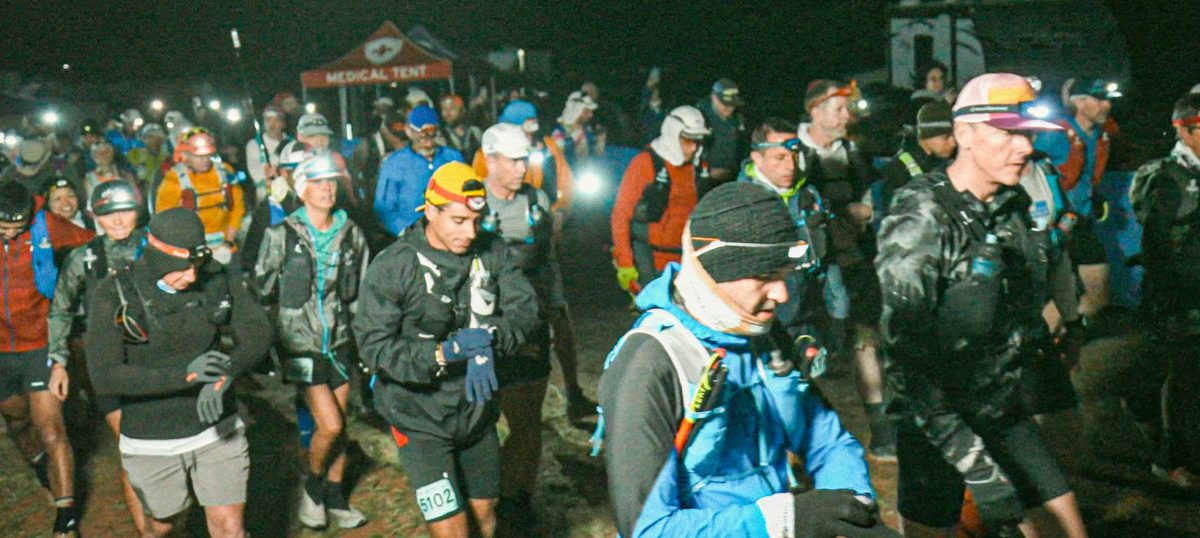



The local 50K is the layer of trail running that converts intrigue into participation.
UTMB, Cocodona, and Western States generate enormous attention for the sport (and ever increasing). But when someone decides they want to try trail running for themselves, they do not start there.
Even if it were wise to do so, the system doesn’t allow it.
They start at a local ultra with 53 runners, a tired race director, zero fanfare, and unlimited heart/soul.
That’s where people encounter the culture of trail running for the first time. The volunteers. The suffering. The honesty. An unexpected depth of warmth from strangers helping strangers keep moving.
And increasingly, that layer of the sport is under pressure.
Episode 300 explores why local races may still be the most important layer in trail running and why they’re so fragile now.
Timestamps
02:38 The Transition of Pain and Perseverance
06:07 Converting Attention into Participation
09:16 Understanding Local Ultras and Trail Culture
11:22 The Economics of Local Trail Races
16:43 The Importance of Local Races in Trail Running
Related Episode
Luxury Running Brands vs Ultra Running Tradition
Presented by Kiprun.
Transcript
Show Transcript
Josh (00:01.932)
It’s 443 in the morning and everyone is pretending to be normal. Cars keep pulling into the parking lot one at a time, headlamps click on, trunks stay open while people quietly assemble themselves for the day. Someone is pinning on a bib to their shorts on a tailgate. Someone is forcing down half a bagel because some podcaster told them that it’s a good idea. Nobody really talks unless it’s with friends and there’s nervous pacing, nervous laughter.
Guys have done this a hundred times, women have done this a thousand times, and they’re signaling that this is casual. This is nothing special, but everyone knows the truth. This is not casual. Every person in the parking lot willingly woke up in the middle of the night to go suffer for the next eight or nine hours in the desert. Nobody’s getting paid, nobody’s becoming famous, no cameras, no spotlight, just a strange internal pool that brought these people into the same piece of dirt.
before sunrise.
Then suddenly everyone starts shuffling toward the starting line. No anthem, no smoke machines, no countdown clock, no clapping overhead in unison. Just a few final instructions that nobody hears anyway, because they’re already trapped inside their own head and they know that things are about to get weird. You start running and at first it feels special. Everyone still has good posture. Race plans are in place, optimism. Then the race settles, the talking slows a little bit.
The fast runners are far gone into the distance and the heat settles in. You stop looking around so much, the world gets smaller, the race slowly strips away all the unnecessary thoughts until all that’s left is movement, rhythm, discomfort, thirst, doubt, and eventually real suffering starts to show up. Your pace chart became meaningless a long time ago.
Josh (01:56.716)
Your family is waiting at the finish line and there’s no way to tell them that you’re going to be four or five hours later than you thought. Your running form is gone. Your hat is sideways on accident and somewhere deep in the race, another runner pulls up beside you and asks, are you doing all right? You roll into an aid station completely cooked. You smell terrible. You can’t think straight. Some volunteer grabs your bottles without asking, fills them, stuffs them back into your vest and sends you back out. They won’t let you sit down.
They want you to keep going. And somehow that tiny act feels enormous. These people gave up their Saturday just to sit in the heat and help some stranger achieve some weird goal. And you keep going and the bonk comes and the real, you know, it’s the real one. It’s the one that makes you question yourself. It’s the existential one. And they’re, the race stops feeling inspiring completely and just starts feeling stupid.
Everything hurts, the landscape feels ancient and violent and somehow it passes, not slowly, but suddenly. Your eyes lift back to the horizon, the pain disappears almost completely. You start running faster again, smiling again, looking around again, and you realize something out there becomes very difficult to forget. As many times as you break down, you come back. That realization follows you all the way to the finish line.
and the finish line itself almost weirdly anticlimactic. It’s just some folding chairs, a volunteer or two clapping, maybe a burrito in your bag. The race director looks like a farmer at the end of harvest, just dirty, exhausted, but happy and proud. Then eventually you drive home and the whole thing is over. And somewhere during that drive home, another feeling starts flickering. Only hours after finishing, underneath that exhaustion that you can’t wait to do it again.
And that feeling, that’s what keeps this whole fragile ecosystem of trail running alive. It’s the Borderlands Trail and Ultra Running podcast presented by Kip Run. My name is Josh Rosenthal, the host and the founder. This is episode 300. Unbelievable. Please give us a follow. I’m really thankful for those of you who’ve been with us for a long time and all the New Year’s who are listening and eyes that are watching. I’m super thankful. The local…
Josh (04:21.518)
50K is the layer of trail running that converts intrigue into participation. And right now that layer is becoming harder and harder to sustain. And by the way, for the sake of this podcast, I’m talking about the local 50K, but at any moment you can replace the local 50K with simply just the local grassroots ultra. Maybe it’s the 50 miler or the 100 miler or whatever. Trail running has never been better at producing attention. I think
that growth is good. I’ve argued repeatedly that trail running needs a better fan experience, better media, better storytelling, better spectacle, because that will lead to more runners. That will lead to better contracts for our elites. And for me personally, it’s just simply a happier life because I love this sport so much. I want to consume it like I used to consume college football. And this is a year round thing. So year round, I can be obsessed with this if all of that improves.
UTMB, Coquedona and races like Western States are producing intrigue at a level that trail running has never seen before. UTMB’s ecosystem had an estimated 23 million views in 2025. So the attention is there. I watched the UTMB coverage. I was there for some of it and then I came home and I watched it. I consumed it. Coquedona, I watched.
an absurd amount of that. Western states, I don’t miss a second until F1 and M1 have crossed the finish line. Then I turn it off and go back to my family. The attention is not, and it’s not just me, and I’m relatively new by standards of like an AJW or someone who’s been in it for a long time, but the attention is there. Rachel Intrican winning coca-dona overall is trawling becoming, is really,
it’s truly becoming legible outside of itself. Prior to that, yes, of course Courtney had made it legible to the outside world in a way. With her Moab 240 like entrance into the sport where she was overall first by like eight or nine hours. I mean, of course she had made it legible there. Killian has made it legible. A lot of people have, there was some, this Rachel Intriquen moment combined with the general excitement around the sport,
Josh (06:45.618)
has been unbelievable. know, the mainstream media that has picked up this story, yes, they’ve picked up stories before, but you know, arguably, Killian Jornet’s states of whatever, when he climbed all of the peaks, the name never really stuck with me. That was illegible. That was too hard. That was too absurd for the world to truly capture what he did.
It was intangible. Rachel, because of Cocodona’s coverage and it being in front of our faces and because of social media and the way that it was all handled, was this moment, this centralized moment, she made it legible to the world. And the problem is not attention. The problem is understanding though what converts that attention into participation. So yes, I want the fan experience and Rachel’s victory at Cocodona.
was incredible fan experience. did a podcast about how I think that could be better. But on the other hand, we don’t fully understand what converts attention into participation. At the very least, we’re not showing the value to it. So the clearest entry point into the sport is still the local 50K. It’s the local grassroots ultra. The local 50K is the conversion.
layer of the sport. Most people do not become trail running fans first. They become runners first. That’s no surprise. I think that will change over time, but right now they become runners first. They engage in the ultra events. They see Rachel Wynn and think, hey, I want to try that. UTMB creates intrigue. Cocodona creates intrigue and demand that only a local race can realistically satisfy for the first time runner.
tremendously important that local race that has 50 60 70 runners is Where that energy is captured because you can’t watch coca-dona Get excited and go from couch to 250 miles in the next year even practically if your body could the lottery is a problem
Josh (08:58.978)
Same for Western States, you’re in the lottery for 10 years. So that energy that it creates, it can’t satisfy itself by participating in that event. You have to come into the sport and the entry point is the local 50K. You go to Google, let’s see, you watch Rachel win, you think, my God, I wanna be like Rachel. All right, you Google trail race in my area, takes you to Ultra Sign Up. You go to Ultra Sign Up, they have a new tool that I think is really great, race discovery tool that has improved their.
user experience dramatically in my opinion. Say you live in Salt Lake City and you type Salt Lake, the first race that comes up is mine, the Salt Lake Foothills Trail Race. And suddenly you’re standing in the parking lot of my race on May 30th at 5 a.m. with, you know, 100 strangers, 200 strangers. The local ultra is not just an event, it’s the crash course in trail running that everyone is trying to protect. The Satisfye stuff, that’s why Satisfye
got such a rise out of so many people because it was so disconnected from that layer that we all entered through. And so many people believe that what Satisfye is doing and the movement that it represents is an affront to the thing that we learn at the local 50K. That’s where we learn the etiquette. That’s where we come in. Now there’s some gatekeeping stuff there, of course. I think anyone should be able to engage and run however the hell they want. However, it’s important to note the local
dirt bag race is where you learn the etiquette. You don’t run UTMB’s main event and learn a whole lot in etiquette because the reality is that you’re not gonna be out on a trail with 6,000 people or whatever, 10,000, 12,000 people or EcoTrail Paris where I’ve run 19,000 people on the trail. You don’t learn a whole lot about etiquette when you’re so tightly packed in. That local 50K is what teaches you how to take care of the trail. It’s what blows your mind about seeing.
volunteers firsthand standing there to serve one person per hour, you know toward the end of the day. What people encounter there is radically different than almost every modern sporting event. It’s what makes it special. But why locals, sorry, why local ultras feel so different? The local ultra strips down to something honest, very…
Josh (11:22.286)
Nobody cares what brand you’re wearing once you’re destroyed at mile 24. So when we talk about trail culture, the idea of trail culture to me, everywhere I see it expressed is consuming the sport of trail running while sitting in front of your phone, in front of your computer, in front of your TV. That’s where we’re engaging with trail culture. Or maybe we go to an event.
And so then we’re discussing clothes, we’re discussing materials, discussing etiquette, all that sort of stuff. But when you’re in the middle of the race, destroyed at mile 24, none of that matters. Carbs, yeah, someone’s maybe gonna give you some insight on nutrition, maybe that matters some, but that shared suffering, it equalizes people in a way that modern life just rarely does. It’s democratizing.
It’s why we want so many more people out there doing it because those moments that are created in that local 50K is these unbelievable bonding moments, these unbelievable internal moments of celebration and accomplishment that is just unmatched. Trail running authenticity is emotionally tied to participation because participation is where the culture
gets earned. Okay, and so then this goes back like and I think the conversation about $180 pair of running shorts can explode into something that feels existential for so many of us because we believe that you just don’t need any of that sort of stuff to to do the part that we all think matters most or the people that are so upset about what’s happening in trial running.
the stuff that we think matters the most doesn’t actually matter at all once we’re in the race itself. And so this is being threatened. The local trail race has a problem around economics and demand and runner experience expectations. So here’s where the problem really enters and why the local race is threatened.
Josh (13:38.382)
It’s got an economics problem. And the biggest challenge here is not attention. It’s once you have that attention, they go to Google, they go to Ultra sign up, they find your race, they show up, there’s 100 people at the starting line. All of that’s beautiful. But a 60 person Ultra, 100 person Ultra gets subconsciously compared with live streams and giant aid stations, premium swag, drones, apps, all the full production stuff. And that local trail race can’t keep up with it. In fact,
just to produce a shirt becomes stressful financially for the local race director. And then there becomes pressure on should we be creating another shirt? Should you be planting a tree instead of a shirt? And that at a corporate level at UTMB and their offices and ANIS-E and Chamonix or whatever, they’ve got people who can sit around a board table and contemplate sustainability.
The guy who’s putting on a race for 60 people who wants to do a shirt and create a memory for everyone doesn’t have the time to think about it. And on top of that, to come up with the $10, the 15, the 18, the $30, depending on what shirt that they want to make, it’s an unreasonable expectation of the local race director to produce any of the feelings that one would get while running Cocodona, Western States, or UTMB. The local race has to charge similar prices
as the big players. That’s what’s crazy. for a long time with my race, we tried to charge well below market because we thought, hey, this is not our job. We don’t have any aspirations of this race putting money in our pocket. We want to do this because we love the community. We love the sport. And so we charged below market value. And we learned quickly that market value is not, no one’s getting rich at market value on trail races. You saw Finn at Singletrack.
acquire or somehow become in charge of the Buffalo 100 and the prices went up. He’s not price gouging. It’s expensive. And if you have if you go to a race like Buffalo that’s been around for 20 years, it’s hard to raise your prices from where they were 20 years ago to what the expectation is to do that to today. And so you have to charge a price not quite our VIPA pricing but market, you know, I think our VIPA probably gets a 20 to 30 % premium. If you’re charging market
Josh (16:02.542)
as the small race, you charge the same price as let’s say a UTMB race, but you deliver what’s possible from a local race, it is not the same. What’s possible to be delivered is not the same. But the runner is saying, hey, I spent $240 on this 50-miler. When I come to you, I get a shirt maybe, I get a medal for sure, get community, I get all this sort of stuff. But if I spend that somewhere else,
I get a whole lot more. get a photographer that gives me a world-class photo that can use as my profile picture for a long time. Local race has to charge similar prices while operating with none of the efficiencies of scale. The sub 100 person ultra is often not a business. Like yes, they’re incorporated or they’re they’re they have an LLC they have you know to limit liability and then for tax purposes sure, but they are people who love
Trail running and I’m not saying the big guys Don’t love trail running don’t hear me wrong But those are businesses and I admire that and I champion that but at the same time the local ultra where the demand is satisfied that we create the demand we bring new people into the sport through that absolutely Threatened by the big players inadvertently. I do not believe it’s intentional. I do not believe UTMB or our Aviva Have any intention of hurting that local race. So don’t hear me
wrong there. The irony is that this fragile layer may be doing the most important long-term work in the entire sport.
Western states does not exist independently from local races. It exists downstream from them, especially because of their lottery system. So without these local races, Western states entire structure doesn’t work. And I think it’s the right structure. Western states does is it does empower local races to a degree. If it meets their certain standards, which is fair, they’re an organization. can put whatever standards they want there.
Josh (18:09.614)
But so long as a race meets their standards, then they can build into these local or more local races, these smaller races that have 100 finishers plus to qualify to be a Western States qualifying race. So that does go downstream from Western States. And then on the other hand, Western States is downstream from these, because without it, the runners don’t enter the sport. All of the demand that Western States satisfies from a…
from a consumer standpoint, from a fan standpoint, is all drafting off of the local 50k races. And to be fair, that does happen vice versa because we watch Western states, we get excited. Again, the loop, we go to Google, ultra sign up, we find the race, and now we’re at a starting line with 50 people, nothing like the Western states experience. But we are now into the ecosystem, we’re in the environment of trail running, and then we can work our way toward.
the Western States, UTMBE, or the coca-dona. The local race is where trail running stops being content and starts becoming our identity. Because what we experience there is we love it so much that we wanna take it on as our identity. And I think large organizations would do well to help preserve the local races that make trail running durable.
So what can Aravipa do to make the local 50K in markets where they’re active, like Arizona, Colorado, Utah, other places, to build into that local community? And I’m not saying they don’t, but I’m saying, hey, this is my example. What can they do that builds into it?
and not so that they can at some point acquire it. They just acquired one of my all time favorite races. And I hope that through that acquisition, it meant that the Zion Ultras, Bryce Ultras, Antelope Canyon, that all of those can go on to have a long, healthy life. But the answer isn’t to build into them, to acquire them. It’s how do we keep that layer intact? How do we keep it protected so that it can satisfy the demand that all of these big races are creating? Because if you lose the local 50K, you lose the sport.
Josh (20:30.444)
Troll running has never been better at generating attention, but attention doesn’t pin bibs on at four in the morning. Attention doesn’t fill your bottles when you’re exhausted at mile 27. That still happens in a small race in a small area outside of town.
by exhausted race directors and volunteers who just love this weird thing, whatever it is. Protect that layer, and I think this whole sport stays alive in a way that we all want.