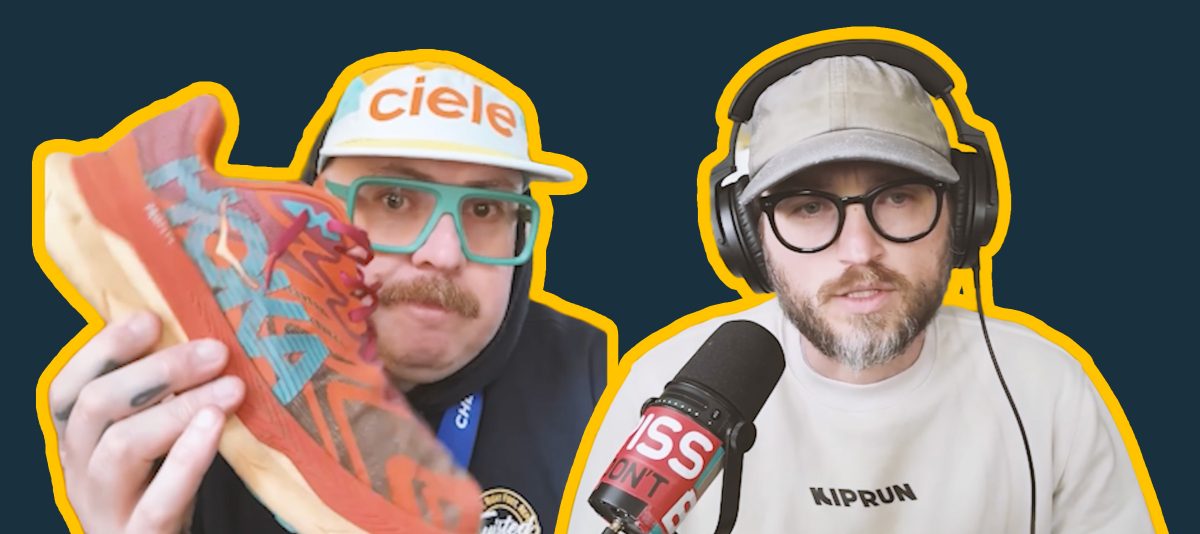



Why do people run 100 miles and why do they keep coming back after it breaks them?
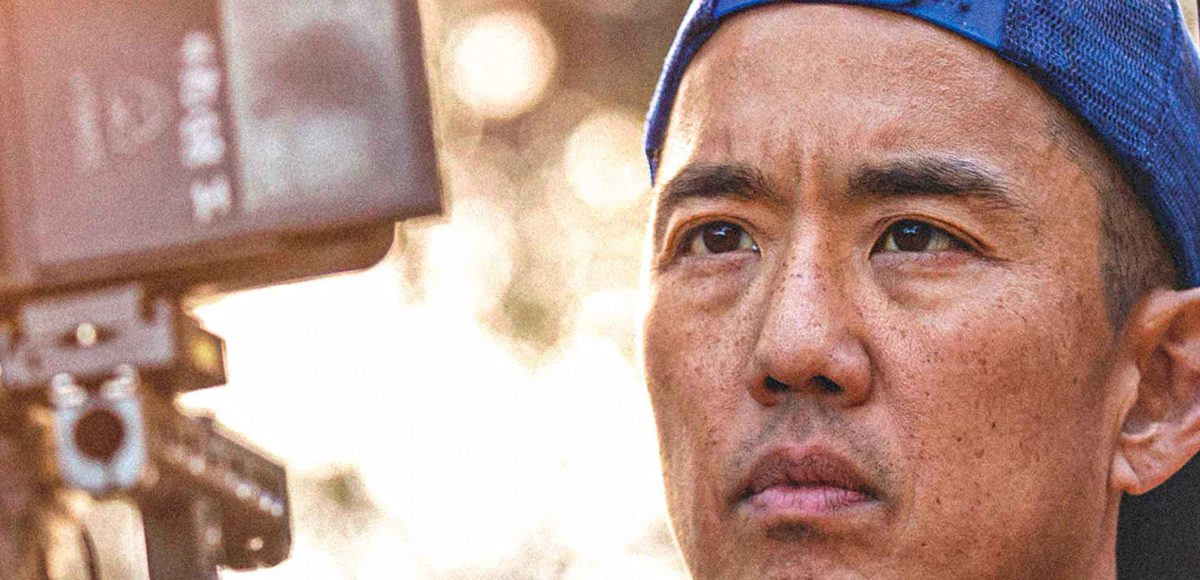
In this conversation with Billy Yang, we explore what really draws people into ultra running and what they’re actually looking for out there. This isn’t about racing. It’s about identity, suffering, and the strange pull to do hard things especially when there’s no clear reward on the other side.
If you’ve ever wondered why people choose something this difficult… or felt that pull yourself… this is for you.
Recorded live in Salt Lake City as part of a Borderlands series exploring how running becomes a tool for navigating hard things (sponsored by @pathprojects )

Presented by Kiprun
👉 Listen to the episode
👉 Watch the episode
Please take a sec to rate and review. It helps others find the good news.
Topics / Timestamps
00:00 Why Would ANYONE Run 100 Miles
05:55 The Journey of the Soul in Ultra Running
09:01 The Power of Storytelling in Sports
16:08 Exploring the Stories Behind the Sport
23:02 Why Do We Keep Going Back to the 100 Mile Starting Line
28:11 Reframing Your ‘Why’
30:30 Ultra Running is the Great Equalizer
Resources / Links
• Josh Rosenthal
* Borderlands.cc
Related Episodes
• Nils Arend, TSP Founder
• Scott Jurek, Has Ultra Running Become too Polished?
Presented by Kiprun.
Transcript
Borderlands (00:00)
I have such special memories of getting into trial running. So, you know, like a lot of us, probably came through Chris McDougall and Born to Run. It was just this massive moment in…
creating, running, runners, new runners, people to go out, people to admire what Scott Jurek had done and all of the figures from Born to Run. I was telling Floris this while we were on our run of like, what I think was great about you, Billy, and what you brought to the scene was that Chris brought people into the scene and I just, feel like your documentaries did a really incredible job of giving it a soul. I just, my first question of what I’m curious about, I mean, if I look at,
I think about the why, which seems to the one that’s had the most views. Do you know the stats? Are you aware of how many unique viewers you have compared to total views? do you know how many times people have watched, do know how many times I’ve watched that? Like with people trying to show them what I’m out there trying to do when I run 100 miles. It’s like the go-to thing to try and show what I’m doing.
I’ll, sorry, I’m getting over something, so. I will never get used to that. I think my instincts behind that was to make something to talk to the average person, maybe a spouse, maybe a friend who thinks, I don’t even like to drive that far, just, yeah, humanize it, but tell it from a perspective of, I firmly consider myself like a mid to back of the packer, so.
You know, like the leaps that I may have started covering when I was making, you know, like documentaries about like Sally and some of the Nike boys. I can’t really relate to that. I do think it’s a, it’s really exciting and it’s definitely a part of our sport, but I identify a lot more with people who are fighting cutoffs to, you know, finishing somewhere around like 24 to 30 hours in a hundred mile race. So.
I just wanted to tell it from that perspective and that was my only instinct. And I kind of feel shortchanged because Goo came on as my only sponsor and they only had like a few shuckles to throw my way. I was like, all right, I had this idea percolating in my head and thought I’d make it and make myself the protagonist of the subject, which is always awkward too.
I’d never in a million years would I have thought that would be my most viewed piece of content. It just doesn’t feel right to me when I’ve covered people like Sally McCray and Zack Miller. Oh, I see. Because you were the figure, it felt weird that the most popular one that you’ve ever put out, you’re the star. Right. And then you go even further and you have… I’ve had people come up to me and tell me that they found ultra running because they
they view that piece of content and I still feel like a participant. Like all of this feels very bizarre and surreal to me. And even saying out loud at the start of the community run, I’m like, I’ve been running trails for over 15 years. Still sounds kind of weird coming out of my mouth because I feel in some regards, I still feel like I just started. And then content creation over a decade.
And that still sounds weird to me. So I don’t know. It’s maybe just a part and parcel of getting old and just time going by really fast. yeah, I definitely go through some imposter syndrome. Like people really know me for this stuff. It still takes some getting used to. I mean, with I remember trying to get my dad to understand what I’m out there doing.
For those who don’t know my story, I’ve tried to run 100 miles 10 times and I’ve finished twice. And my dad is supportive and was in my corner, he’s no longer with us, but he was in my corner for me, I was like, you gotta watch the Y. mean, just a beautiful memory of sitting with my dad and that was the time that he kinda got it. I think a lot of people, so back to that comment, like the soul, I feel like, and I wonder if you have a different way of wording it or if you agree.
the way that you presented it, like the monologues that you put before those documentaries, you gave it, you helped give words to us who are out there doing it for any other reason except fitness. You know what I mean? Like fitness was maybe number 15 on the list of what we’re out there doing. And I feel like the why was the first way I could relay to non-ultra runners, this is what I’m doing. And they started to get it. My dad still said I was crazy, but at least then he got to see it and it started to click for him what it was.
Yeah, I do think it’s a, you know, the old adage of it’s 20 % physical, 80 % mental, but within that 80 % I also put emotional, I put the soul, I put so many other different things under that category and that umbrella because it is a journey of the soul. is, you’re putting yourself, you’re intentionally paying.
$400 or $500, I don’t even know what racist cause he says, but it’s… just did an episode about it that released this week. Your mind would be blown, actually. Really? Yeah. Okay. Yeah. We’ll talk later. Okay. Yeah. But it’s… For me, anyway, and I can’t speak for everybody here, but for me, it is very much a journey of the soul, and putting yourself through the crucible of running a 50, 100K, 100 mile involves some…
like shedding of whatever, know, whatever perception you may put out there and then it does reduce you to your true authentic self. And I think there’s a lot of beauty in that journey. so to hear that, that’s great. I mean, not a lot of people can identify with it. I know there’s a lot more like, bro-y dudes who are just like, just finished at all costs, David Coggins, know, Kevin Haynes type people.
I can’t really identify with those people because for me it’s so many, it started with me and my dad too. After I lost my dad, it’s how I found this incredible community of ours. So there’s a lot of emotional connection to why we do what we do. And hopefully I’m glad people can resonate with that. I think this is why your documentaries, is that on? No, no, I was fidgeting with it. I think it’s why your documentaries are.
about elite runners are so interesting because I think about the Nike, you say, the Nike boys. The 2015, 2016 running of the CCC at UTMB. When you tell the stories of the elites, you’re still telling it soulfully. And I think that’s why someone like me, I’d give anything to be Zach Miller and have his ability, but I don’t. But because you tell it soulfully, instead of from the perspective of his performance, even though we can all obviously see the performance is incredible.
But you bring a soul into it. think that’s what’s special about it. Yeah, and it helps to have a Zach Miller type who has so much character and gives everyone so much of his time and undivided attention. I have a good friend of mine who underwent Haglund surgery recently. And I said, hey, Zach I know you went through something similar.
do you mind talking to him and he has some questions and Zach is like, yeah, yeah, no problem. And just like pass on his number. And I think that’s like the ethos of our sport. It doesn’t matter if you’re Jim Walmsley, Zach Miller, you name it, Killian, like everyone is so approachable and so kind and generous with their time.
I think of like, Zach, you know, the figures who’ve shown up in the documentary work that you’ve done, from Zach to Tim Tollefson, David Laney from the, you know, the Nike boys. Do you, I mean, when you’re looking at bringing their stories out, I mean, how…
What’s the level of intention like? Are you sort of driving the storytelling? Are you really just trying to capture it in who we have come to believe Tim Tollapson to be? Is that just really who he is? Meaning, what you captured in these documentaries of this nice guy who’s out there giving everything he’s got, do you feel like you’re really truly capturing who they are off the clock? Because they seem like they’re also your friends when you’re not at work. Well, I think that’s my intention with anyone, regardless of where they are.
from front of the pack to I did a story on this very, maybe not even middle of the pack, like the cutoff chaser when he ran Leadville. I did a film for La Sportiva, it didn’t come out on my channel. But that was every bit as gratifying because I think my instinctive with anything is to have a fully fleshed out protagonist, a hero that you can root for.
and tell a three-dimensional story. If you can’t tell a three-dimensional story, if you can’t connect with that subject, what are we talking about here? They’re just another fast runner, they’re just another faceless, nameless runner. But it’s with everything, right? I mean, that’s the power of story is if you connect with someone through storytelling and just kind of bring their true authentic selves to life, I think.
I think that’s where we’re kind of at the crossroads at the sport of the sport becoming really fascinating with live broadcasts and everything else. if you can’t get the viewers to connect with the subjects through a story, through like making them, rounding them out into, not just about like how fast they can run a hundred mile race, but like who are they beyond when they take their trail shoes off? Like that’s always my instinct.
I mean, so you kind of touched on it. The sports evolved a ton since the first content that you put out. What’s your take on where it’s at right now in terms of where it was? When I think about where it was, I’d characterize it this way, is that there was, I think of like the Anton Kiprichka’s, there were these personalities, I feel, that were much stronger. And I don’t know why that is, if they were just great storytellers that were able to bring them forward.
And today it doesn’t feel like it’s as strong. And I don’t know if it’s the storytelling, I don’t know if I’m just a jerk or what it is, but how would you characterize where it was in 2015, 2012, and where it is today? I just think we have a lot more players, and that goes for athletes and content creators and podcasts. I you name it, there’s just a lot more media. So maybe the noise is amplified, but I do think the opportunity to…
tell some really great stories and have the means for anyone here. If you wanted to become a content creator, if you wanted to tell stories about your best friend running their first 100 mile, there’s never been a better time. And so I’m really excited about that. do think, I have two feet, both my feet kind of firmly entrenched in both camps of I want to.
I want to bring as many people into the sport as possible because I do think it’s transformative. I do think it’s the best frigging community out there. So many people are welcoming. So many people welcome me. At the same time, I do think there is a way to grow it responsibly and to grow it with integrity and to grow it in a meaningful way where we don’t lose that soul. know, we don’t just get the bros showing up and saying, yeah, yeah, I’m going to crush Leadville.
And I don’t mean to be dismissing or derising on that, but you know what I’m saying. I think you can have both, but at the same time for me anyway, because the soul is so important that I feel like it’s my, it’s imperative within me to grow it in a very meaningful way. and you’ve got your, talk about a number of, your feet are in a lot of different areas.
was it when it comes to the Western States broadcast or anything like you’re kind of in a lot of places you’re on stage at TrailCon and stuff like that. If you had the time you had now that you had in 2015 when you like you were putting out more of your own documentaries on your own channel, do you see any stories right now that you wish you had time to tell that you could tell in the same way if time was available to you? Yeah, I would definitely.
So one of my responsibilities, I’m part of the 15 member board of Western States board of directors and I’m also tasked to direct and produce the live broadcast. And it was an interesting challenge. mean, so first year it was almost exclusively, the spotlight was almost exclusively on the elites. And we got, we did get some pushback.
about like, hey, I want to hear more mid to back of the pack stories. And my initial instinct was like, well, people aren’t tuning in for that. People want to see the excitement of the front of the pack. then, but then I also was like, hey, wait a minute. like there has to be like, you know, when we’re talking about connection and when we’re talking about having a rooting interest, like, why can’t we do that? Why can’t we tell a story for the 14 hour finishers to the 30 hour finishers? So.
⁓ and so that was my mission last year specifically to amplify the mid to back of the pack voices a lot more. And I went to Western States training camp with the sole purpose of following and like just writing with people and like, Hey, are you running the race this year? ⁓ let me talk to you and just got their stories, put it out on social media and people loved it. People absolutely loved it. And then tied it back around when they finished at during the live broadcast.
I mean, yeah, the live broadcast of the race and everyone’s like, oh, I remember that girl. She was this person or like that guy was that. like, again, like just going back to the power of story, that is a power story. And that is how you get more people into the sport. It’s like, you know, just make the community a lot more accessible and maybe people draw inspiration from who knows whom, like not necessarily the front of the pack. Yeah. I mean, even
You know, your LA Dodgers, even the elite sports, you know, like the big sports, they are uninteresting without story. And so we don’t notice it as much because they do it so well. We root for a certain team or we root against a team because the story is being told so well. I think that, that’s, you you talk about doing it at a training camp and all that, like, you build that anticipation going into Western states and people will jump on. People outside of the sport hopefully will jump on.
and want to do it. But is there somebody you see right now that you wish you had time to tell a more robust story about, a newcomer or someone who’s crushing it, Anton Kapichka maybe, you know, getting inspired and going back out, you know, what he did at Leadville two years ago, you know, is there anything that’s interesting to you right now? Well, I don’t think the imperative’s on me. I think like what you’re doing is plenty interesting because like getting to know you a lot more, you have this fascinating entrepreneurial background, you’re doing all these different things.
had all these different POCs being stirred at the same time. And the first time you came on my radar was when you did that interview with Scott and Brian from Path Projects. And I was like, oh, this cat’s kind of like, he has an attention to detail to putting out quality, maybe not the numbers where you should be, but your intentionality and your attention to putting out a good product so that people will want to tune in is, yeah, and I think just like that.
Telling of the entrepreneurial story. I think that’s also fascinating in how we’re talking about Media and you know, like what goes like maybe people aren’t inspired to be content creators Maybe they want to start a brand an outdoor brand. Yeah, and you’re telling those stories. So yeah Yeah, I mean I think the owners can be on everyone in here who has any level of interest and in storytelling it could be audio it could be video it could be You know sub stack. Yeah
But there’s so many stories, especially as the sport expands. so, sorry if I’m not landing on one person immediately at the top of my mind, but I do think there’s just like a million and one stories, especially as the sport is evolving and growing and how they found the sport. And people are like, do they come from a drug addiction background? Do they come from a background where they’re sedentary and overweight? So yeah, there’s so many stories out there.
that can be And I think what you, I mean, so I was putting out documentaries and by the way, from a quality standpoint, without Ben, wherever Ben is, it wouldn’t be what it is without Ben. So shout out to Ben. Yeah, shout out Ben. know, I released documentaries and I put out, you know, and I put a lot of work into the monologue. I don’t know where you got it from. So this is my question.
I, people like me, we’re looking at you doing documentaries. mean, as a primary person, say, he’s telling these great stories. I’ve got an eye for the story, but I want to do this thing where at the beginning I pulled him in emotionally. That’s, you know, that’s your calling card from my perspective. Who, who was your, so you inspired me. Who inspired you to do what you did? Is there a, it doesn’t happen, I not necessarily in running. Is there a filmmaker? Is there a storyteller? Is there an author? Like how, who do you point to?
Yeah, I I did look to people like Jimmy Chin is a great storyteller out there. I feel like rock climbing in general is maybe about a decade in front of trail running. And so there’s a lot of rock climbing content that I absorbed and I thought is really cool. I don’t know if you ever saw Valley Uprising, Camp Four produced that.
It just told the origin story of Yosemite Valley. I thought it was just like, I related to it a lot. And I remember thinking, I still have this bigger vision of telling the story of American ultra running and how it came to be, to the incredible growth that we see in the upticks from Ultra Marathon Man, Brian McDougall, mean, Chris McDougall in Born to Run and what an impact that made and all these interesting cats and characters.
that came along. But at the end of the day, I think my inspiration has to be myself. And let me explain. Back in 2014, when I first produced…
the content that I was putting out on YouTube, I did it for somebody like myself. Ultral running is a very weird thing. Like we love it when we’re like in the middle of it, but just to get that initial momentum to get out the door, you need some motivation. I need motivation. Like I need motivation before a race, before I’m about to do an ultra marathon. It’s not like going out to eat a steak dinner. You don’t need any motivation. You’re like, I’m hungry.
I’m going to have a nice glass of Cabernet and a nice ribeye. I don’t need any motivation for that. But for something that we purportedly love, which is time outside, that initial push to get outside, we need it. So I was thinking about somebody like myself who just like, what’s going to get me out there, but also just continue to go back to that well of inspiration.
And so it was for me, somebody like me. I would say this about you and I would say this about myself. I feel like I represent kind of the everyman. I’m just an average person. I probably have some overlap with 80 % of the people in the field in that I’m not trying to win this thing. But there’s something mysterious that calls me out there that I just have to do it. Last night after we had dinner, went, OK, I’m going do little bit more prep. I’m going to watch some of your documentaries. And I turned on the Y.
And it starts, I this is, just saying how effective they are. It starts, I’m like, oh God, I gotta sign up for something. But I can’t right now because of my lot in life, I can’t. And so I closed it. So I didn’t watch anything and preparing for it because it’s too effective at what you’re saying of like, when you say that it’s for you, it’s because you represent this average person in the space of like, we’ve got a taste for it, we’ve done the 10K, then we went to a half marathon, then we did a 50K, and then we did the 50 miler, 100K, 100 miler.
And it got that, when you have the taste, know, content like yours is that thing that, you know, making your case for more brand deals for you, you push over the edge into people to going and, you know, handing over their money to a race director, which we have a race. I’m just kidding. Is this a commercial part of the podcast? Open range. Anyway, yeah. So I just think that’s what’s, you know, you.
have clearly have plenty of evidence and here’s more. It’s just that you’ve inspired, you inspire people to go sign up for races, which is the best part of this community. Well, why do we keep going back to that well? Like why do we keep, I mean, when you’re running out there like mile 64 of a hundred mile race, you’re not like skipping through a forest. It’s painful, it hurts, you’re puking, you’re…
Shitting on the side of the woods, you’re being nudged by your pacer to keep moving forward, to keep one step forward. And for some reason, at the end of all of that, you cross the finish line, and maybe not right in that moment, but the next day, two days later, you’re like, yes, let’s do it all over again. Why do we keep going back to that well? For me, I have this internal person that I believe I am, and I don’t have external evidence.
And so it’s this thing I believe about myself that to me I’ve so grabbed onto the 100-Miler because it’s external proof of who I believe I am inside and I don’t have any way of showing it in my own head unless I go do 100-Miler. Yeah, I’ve done businesses, I’ve been an entrepreneur for long time, I’ve done a lot of different things that, but to me I don’t think of those things as mattering. Something about me going for 100-Miler and even DNFing eight out of 10 times, that is where I’m telling the story of who I am. Why did you DNF eight out of the?
Where do I start? Well, it’s because I’m not very good at… No. Okay. So my why never required a finish. I could satisfy my why for running 100 miles without the finish line. Interesting. I didn’t have… Until number 10, which was a documentary that Ben and I did together about Zion Hunder-Miler last year, my tenth effort was the first time my why required a finish line. And then the whole time I never…
And there was never even a chance that I was gonna say no. And what was your why prior to that? My son had a tumor on his liver that had to be removed. And it was like this, I felt like I needed some sort of, I didn’t know how to handle the pain, my pain of watching my son go through that. I needed to suffer in some way. Like it was this, I’m not saying it was healthy, but it was me saying like, and my wife had just given birth to.
My second child, it’s like, so she’s going through some pain. My son had a tumor. And it’s like, I was looking for something in the pain because I was healthy, I was able to run 100 miles, or I was able to at least try, you know? And so I needed to get out there and feel, I needed to go out and feel something for myself because I was by my wife’s side, and she was the one going through all the pain. was by my son’s side. He was going through all the pain. So my first 100 mile attempt was I was in that space of like,
needing to feel the suffering for myself. And so I got to mile 80 at the Zine Hunter Mylar that year. And was just a, that one was just a mistake around things I didn’t know about. Water and a water bottle falling off the side of a cliff. Jeremy Cox, I don’t know if he’s here, he dropped it. But yeah, everyone has a story. Sometimes I just wasn’t trained and I shouldn’t have started, but I thought, God, I’d rather DNF because I’m not ready than not start.
I was telling Floris, we lived for a summer in Amsterdam, which is 12 feet below sea level. And I was signed up for Wasatch and I was like, no, I’m not going to do Wasatch. Then I thought, why not just DNF? Who cares? And I timed out, I made it to Upper Big Water, mile 48 at the cutoff. I thought, I would rather DNF that than not have started. So a lot of it is, yeah, I just needed to be out there suffering and finding the end of myself.
I wish the end of myself was more consistently on the other side of a 100 mile finish line, but I find the end of myself in the 20s, in the 20s and 30 miles. But then this last one was, yeah, my why is to finish. My only why was to finish 100 miles. And when I did that, that was, I was second to last place. I was 35 and a half hours. Zion has a very generous cutoff and I’m thankful for it. yeah.
I want to be clear, that wasn’t a judgmental plush analysis. No, wouldn’t receive it as How’s your son today? He’s great. I mean, he’s after that happened. We had this horrifying moment where they couldn’t figure out what was on his liver for six weeks. So he had pneumonia. And then they said he has to be clear of pneumonia for six weeks before we can operate. And we can’t biopsy. All we know is that his liver is completely consumed by these tumors.
but we don’t know and we won’t know for six weeks. So we had this six week period when my wife was pregnant with baby number two of we don’t know. mean, was just this, it’s even hard to think about eight years later, seven years later now. Is there any crossover in that mentality of that ultra mindset of just like keep putting one foot forward? Yes. As it, yeah. Yes. I mean, that’s the thing. So, you know, I often think, do ultras help me live like my day in and day out life better?
Or do I push really hard in my day in and day out life better so I can be a better ultra runner? And really the answer is yes. But ultra running, because I’m ambitious as an entrepreneur, I try things that are really hard and that’s what I most prefer is to try things that are really hard or that may not be possible. Sometimes they are and sometimes they aren’t. Ultra running is the ultimate in helping me. So I don’t care if I DNF 100 more times because I’m pulling from that over into trying to be a better dad, trying to be a better husband.
better entrepreneur. There’s a lot of people in my sphere that I have influence over within that. And it makes me better in all of them, being able to put one foot in front of the other. I always want to reframe what’s your why to just why not? Why not give it a go? I am inspired by your story and people like you who just go out there and try different things. I think being an entrepreneur is far more scary.
than going out there and run Wasatch. Because there’s a lot more at stake, clearly. But it also underscores maybe where you and I might align is that we all, like this this thing that we call life, and this is my cheesy moment here, but we all get one shot at this. I mean, really, we all get one shot at this. Like I have somebody who was
who just got diagnosed with stage four colon cancer. 49 years old, healthy, he’s a running buddy of mine. And just like knocked their life, like completely upended their life. it’s just like, now the focus just becomes about like, do we make it another day, another week, another month? So.
I don’t know, and in the wake of what I saw in Los Angeles with the wildfires and the devastation and people losing their lives, their homes, why not just take swings in life? I lead a very unconventional life. My wife, Hillary, and I and our dog, Charlie Salami, we live in a tiny home. We live very simply. Our North Star is to just experience life in all the myriad of different ways through travel, through
community through trying hard things and I think so far that’s steered us in the right direction and in us living our most authentic lives like we’ll never have hundreds of thousands of dollars will you know like but We’ve tasted that she’s had a corporate past. I’ve had a corporate past and We we didn’t find a whole lot of fulfillment. That’s us. Like that’s our north star. Like it’s not for everyone
But I do think, why not? Why not try things and see where you land? What’s the worst that could happen? Out on the trail, this is my favorite thing about it, is that it’s the great equalizer of all. When you’re out on the trail and you’re suffering and it’s late in the race, whether it be you’re suffering through a half marathon or a 10k or the 100 miler,
There’s just this thing that gets built out there that’s in line with that of like, the people that you meet and the way that you meet them and the way that you connect. I have a friend who’s an evolutionary biologist named Alex and he was saying the same chemicals that are firing in your body late in a race, they’re the bonding chemicals. And so like you’re building these deep, rich bonds with people that bank accounts don’t matter. Like none of the stuff that matters. There’s something about trail running that is the great.
Equalizer to me in terms of suffering. We’re all getting beat up by it. We’re all working through our own thing We all have our own wise but it’s it’s a it’s a powerful equalizer you really could be running next to a dirt bagger who lives out of the bed of his truck or a venture capitalist you just don’t know but everyone out there is on equal playing field and none of that other stuff really matters one of my DNFs was running next to a guy who played for the Baltimore Ravens. He was really he was second string and he had just
retired, but he was like, yeah, man, I just need to keep doing hard stuff. I’m like, wow. Which is harder, the NFL or running this 100-miler? And at the moment, he said the 100-miler. I was like, I’m stronger than NFL players.
Billy, thank you.
This is a lot of fun. Thank you guys so much for coming out.