


Trail running is growing fast, but is it actually scaling? If you’ve ever felt like the sport looks bigger than it is, or struggled to follow it as a fan, this episode breaks down why. This is for runners and industry insiders trying to understand what’s really happening beneath the surface of trail running’s growth.
Josh unpacks the difference between participation and fandom, why brand investment is propping up the pro layer, and what’s missing for the sport to become something people actually follow. Western States and UTMB become the proving ground for a bigger question that could define the future of trail running.
This one’s for the runners who love the sport and want to understand where it’s actually headed.
Presented by Kiprun

👉 Listen to the episode
👉 Watch the episode
Please take a sec to rate and review. It helps others find the good news.
Topics / Timestamps
00:11 – The Illusion of Growth in Trail Running
02:05 – Understanding the Growth of Trail Running
03:33 – The Emergence of Fandom in Sports
06:58 – The Disconnect Between Fans and Athletes
08:18 – The Evolution of Running Culture
10:38 – The Importance of Fandom in Sports
Resources / Links
- Salt Lake Foothills Trail Races
- Josh Rosenthal on IG
- Borderlands.cc
- La French Trail
- High Tones
- Subwhatever
Presented by Kiprun.
Transcript
Speaker A
00:00:00.080 – 00:11:32.670
Trail running is growing fast. More people running, more brands entering, more money flowing into the sport. On paper, it looks like a breakout moment. But here’s the problem.
Sometimes what looks like growth is just investment. An investment can disappear. You can spend your way into momentum without ever building something that lasts.
And part of the confusion is, is what we’re seeing at the top, more sponsored runners. Course records getting demolished because those runners have more time to run because of these sponsorships. They’re getting better and faster.
A few big contracts are getting talked about. It looks like a real professional sport is forming, but that layer is fragile because those contracts aren’t being sustained by fans necessarily.
They’re being sustained by investment. I do believe running is growing. It’s obvious it passes the eye test, but not in the way that people think.
Because there’s a difference between more people doing something and building a sport. People actually follow. And if you don’t build that, there’s nothing underneath it.
And right now, trail running is scaling participation, but not fandom. The new KIP Summit Series is out. Check them out@kiprun.com or better yet, ask your local retailer if they carry them.
I want to be clear, this isn’t fake growth. It’s just being misread. Because if you zoom out, there are legit signals of growth. Races are selling out faster than ever around the world.
More people are showing up at trailheads just to run. More people are entering lotteries and not getting in from the outside. That looks like a sport taking off. And in one sense, it is.
Of course, trail running is growing as something people do, but participation doesn’t automatically create a sport that people follow. And I think that’s where the confusion starts. The second signal is the brands. You see more shoes. It seems like they’re popping up all the time.
New companies, more product drops, more marketing, more presence. Some of these companies are massive public companies. Real revenue, real margins. And that reinforces the same story. This must be working.
But what that actually proves is that people want to buy trail products. It proves demand for gear. It does not prove that people are deeply engaged in following the sport itself. Then there’s what’s happening at the top.
More sponsored athletes, the faster times, records getting broken.
You hear about contracts getting bigger and bigger, and it starts to feel like something is really forming, like a real professional layer is emerging, bubbling beneath the surface and emerging. But this is where it gets subtle, because that layer looks real before it. It actually is real.
We’re seeing the appearance of a professional sport before the foundation actually exists. And the foundation in any real sport is the fan, not the athlete.
People who watch, people who care, people who follow, people who open their wallet, because that attention does turn into money, and that money sustains the whole ecosystem. Here, it’s different. Right now, brands are funding the professional layer without a fully built fan system underneath.
And that creates a different kind of economy. Right now, brands can pay athletes because people buy gear that’s tied to participation. People run, people buy shoes. Brands grow, athletes get paid.
But that system has limits. You can only run so much. You can only buy so many pairs of shoes. Participation is finite. Product is cyclical. Fandom is different. Fandom compounds.
It gives people a reason to stay engaged, to care about outcomes, to follow stories, to spend money. Over time, you age out of participation, but you don’t age out of fandom. Just think of the woman standing behind the bar and Ted Lasso.
She’d been a fan for a very long time. She cared deeply. And when was the last time she played soccer? We have no idea if she ever even did, because that’s not the point of fandom.
You don’t have to have played the sport to be a fan of the sport. Participation builds the base. But fandom here is what builds, builds our ceiling. And that ceiling hasn’t been built yet.
This is where I think the definition of growth gets confused. Explosive growth in a sport isn’t more people doing the sport, it’s more people paying attention to it.
Most people who watch soccer never played or played poorly at best, or on a little league team. Most people who follow Formula One have never driven a Formula one car. You don’t need to participate in a sport to be a fan of it.
You just need to be able to follow it. And right now, trail running hasn’t figured that out yet. There’s no clear path from casual interest to invested fan.
There’s no real point of entry, no obvious way to go from this. Seems interesting to. I follow this closely. The fan experience doesn’t feel designed.
It feels accidental in a very charming way, in a way that I think a lot of us actually like. And you feel that the moment you try, you turn on coverage, you try to understand what’s happening.
And unless you already know the athletes have some awareness of who is in this race, or you already know the course, or you already know the context, it breaks. You don’t know who matters. You don’t know what changed necessarily. And I know that everyone’s trying their best. So this is not intended to be shade.
We don’t know who’s on screen. We don’t know who the runners are. It’s hard. We. We try and figure out what they’re wearing at the start line when we can see their faces.
Then we try to, with the drone, say, okay, that person has orange tights on. That must be Anthony Castalis, because he’s. That’s Nike gear and so on. We get it. It’s hard.
And then the people who are on screen don’t know anything more than the people who are in the chat. In fact, you’ll see sometimes if you’re in that chat, the chat is informing the people on the screen of things. And that’s charming.
Like, I’m not saying that that’s bad. That’s part of what we all love about it. But that doesn’t scale. There’s no continuity. Races don’t connect to each other. There’s no clear season.
We don’t have jerseys. No. No structure that carries meaning from one event to the next. There’s no teams rooted in place.
And the idea of team, A team and trail running is still being formed. You can’t.
You can miss everything and not feel like you’ve missed anything, because the sport is being built for the runner experience, not the fan experience. And I’m a runner, and so I’ve been really happy with this, to be honest. But as I age and become just a fan, or more of a fan than a runner of the.
Of the elite version of the sport, it. It’s hitting home race start times. They’re optimized for runners. A 6am start is not optimized for the fan.
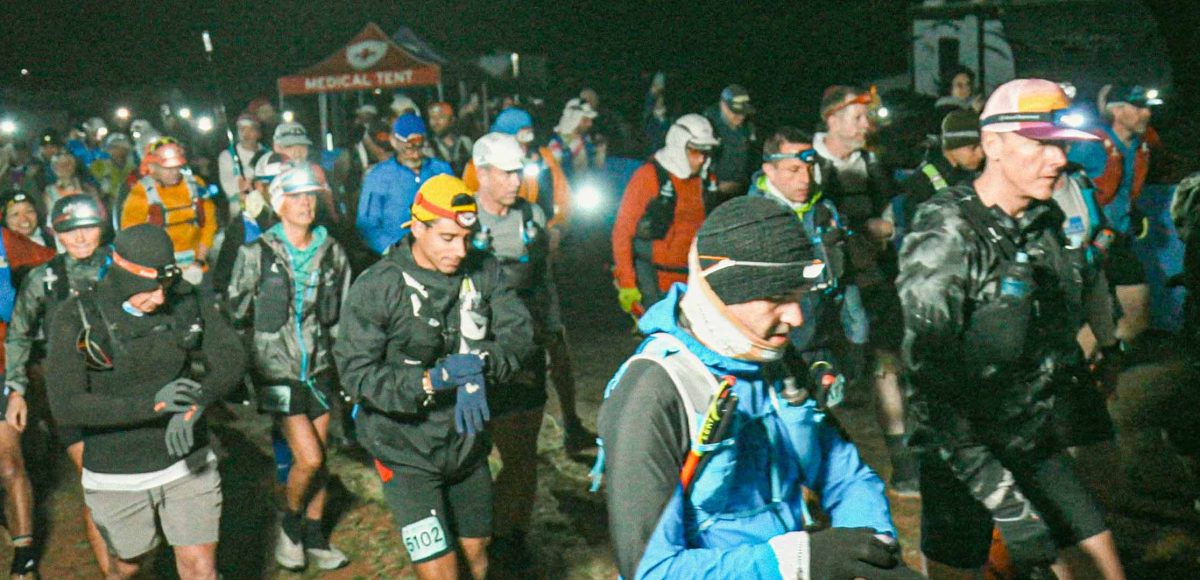
Course design is optimized for runners, not for, let’s say, visibility of cameras. The experience on the ground is incredible if you’re in it. Like, think about it.
RVIPA being our greatest example of a growing race organization in America. The people who run it love it. It’s incredible. And I get it. I understand why. Because it’s been built for the runner and not the fan.
And that makes sense. It’s just that maybe times are changing now.
The experience on the ground is incredible if you’re in it, but from the outside, it’s just hard to follow. And that is important. And part of this is cultural. The sport values closeness. It values being inside.
It values the feeling that you’re part of something. And in some ways, the inaccessibility is part of the appeal. If it were easier to follow, it might not feel the same.
The confusion isn’t just a flaw in some Cases. It’s part of the identity. Back to that word, charming. It’s part of how we think of ourselves as a community and that we’re not fully buttoned up.
We’re not corporate, we’re not slick, we’re not professional. But there’s a trade off, because you can’t build a real sport that way. The investment will go away. Without fans, there’s no scalable attention.
My kids who don’t run don’t want to sit next to me and watch the current product. It’s hard to make a fan out of a young kid who doesn’t have the bug already, and very few, if any, do.
And without scalable attention, there’s no scalable money. And that brings it back to the core issue. Athletes earn more when fan attention is monetized, not just when products sell.
Merch, Access, media attention. That’s what creates leverage. I will be the first person in line to buy a Courtney Dalwalter jersey if Solomon creates it.
Or hey, speaking of Solomon, get me a Dan Green jersey for my kid. When can I pay to be part of the finish line experience? Someone who’s been a die hard college football fan his whole life.
You are used to paying for access to watch the thing that you love in person. I would pay for access. I would pay to be closer. And that’s not adulterating a sport, that’s just what sports do.
Because the fan experience is primary to the athlete’s experience, which is secondary. When does following the sport feel like something I can actually invest in? Right now, it doesn’t. So what you end up with is this strange dynamic.
A category that works, products sell, brands grow, but a sport that hasn’t fully scaled. And that’s where the risk is. Because participation and product have limits. Fandom doesn’t. Without building fandom, this model hits a ceiling.
And if investment slows down, we’re going to find out very quickly what’s actually there. Because right now the professional layer is being supported from the top down, not from the ground up. So the problem isn’t talent, it’s not interest.
It’s not even growth. It’s that the sport hasn’t been built for the fan trail. Running is succeeding as a category, it’s not yet succeeding as a spectator sport.
And I want to test this not in theory, but in practice. Western states utmb the biggest moments in the sport, not just as races, but as experiences to follow.
Because until the fan experience matters as much as the runner experience, this sport will keep growing. But it won’t truly scale.
I am text block. Click edit button to change this text. Lorem ipsum dolor sit amet, consectetur adipiscing elit. Ut elit tellus, luctus nec ullamcorper mattis, pulvinar dapibus leo.