


Brooks Cascadia Elite. Trail running shoes have lived in a protected space. Performance was enough. If it worked at mile 80, nothing else mattered.
That’s shifting. The category is no longer insulated from expectation. Design, identity, and pre-run judgment are starting to matter in a way they didn’t before.
Brands now face a different question. Not just does it perform, but does it hold up before the run even starts.
The Brooks Cascadia Elite is Brooks stepping into that question directly.

THE FIRST THING I NOTICED ABOUT THE CASCADIA ELITE
The Cascadia Elite doesn’t hide.
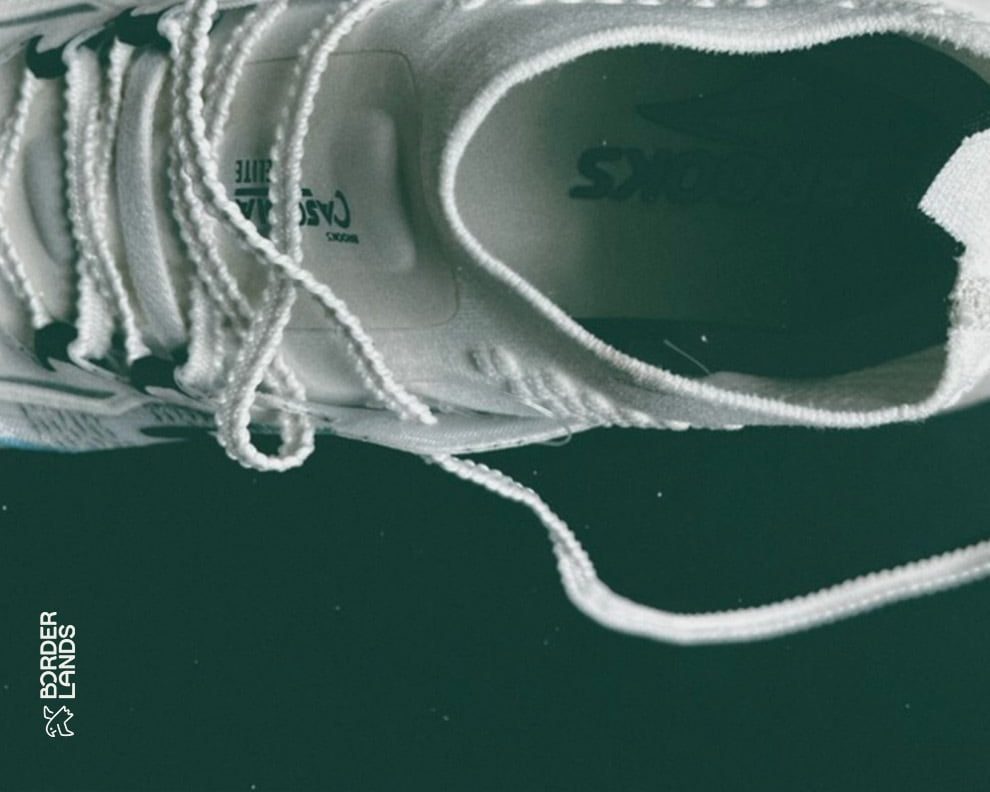
The silhouette is deliberate. The lines are clean. The proportions feel considered rather than engineered as a byproduct. The Cascadia Elite reads as a finished object, not just a solution to a problem.
Brooks has historically been functional first, aesthetic second. This feels reversed or at least balanced for the first time in a meaningful way.
The Cascadia Elite signals a category shift. Trail shoes are no longer allowed to earn their credibility only after suffering. They’re being evaluated immediately, visually, culturally, before they touch dirt.
WHAT THE CASCADIA ELITE BELIEVES ABOUT RUNNING
The Cascadia Elite believes performance alone is no longer enough.
This shoe is for the runner who wants alignment between how something works and how it presents. Someone who doesn’t separate function from identity.
It rejects the idea that trail gear needs to look accidental to be authentic. There’s intent here. That’s the point.
The Cascadia Elite prioritizes completeness. Not just underfoot experience, but how the product stands in the world before and after the run.
This is Brooks acknowledging that trail running is entering a phase where taste matters, and choosing to participate rather than resist.


BROOKS CASCADIA ELITE SPECS
The details still matter. Just not in isolation.
This is a complete system, not a partial step. PEBA foam, plated propulsion, Matryx upper, Vibram outsole. Every component signals intent. Nothing here feels transitional or experimental.
Brooks isn’t iterating toward this category. They’ve arrived in it fully formed.
What stands out is the absence of compromise. They didn’t hold onto legacy materials or hedge with familiarity. They adopted the current performance standard outright.
That matters because it changes how the shoe is read. Not as a Brooks shoe trying to compete, but as a modern trail super shoe that happens to come from Brooks.
• Weight: 9.4 oz / 266.5 g
• Drop: 6 mm
• Stack: ~40 mm heel / ~34 mm forefoot
• Upper: MATRYX® engineered woven upper with Kevlar® fibers
• Midsole: DNA GOLD 100% PEBA cushioning
• Plate: Carbon-infused Pebax SpeedVault+ trail plate
• Outsole: Vibram Megagrip Elite
The Cascadia Elite is not a tentative move.
It’s Brooks closing a gap in one step.
For years, they competed on trust. Reliable, durable, proven over time. That worked when the category rewarded restraint. It doesn’t anymore. The center of gravity has shifted toward shoes that signal intent immediately, before performance has a chance to prove itself.
This is Brooks accepting that shift and responding without hedging. Not by iterating on what they were known for, but by adopting the full language of modern trail racing in one product. Premium materials, aggressive positioning, and a willingness to be compared directly to the category leaders.
What matters is not whether this shoe wins. It’s that Brooks is now building products that expect to be in that conversation from the start.
They’re no longer asking for trust over time.
They’re asking to be evaluated on sight.
Recent Editions of Almanac
Borderlands’ considered look at gear through a cultural lens, not a performance one.
Kiprun Kipsummit Race
Arc’Teryx Sylan 2
Norda 001a
Mount to Coast H1
Gear-related Podcasts:
I Was Wrong About Kiprun
44 Running Shoes Tested Over 6,000 Miles
Norda 005 | Shoes are Never Really Just Shoes
More in Gear >>>